



On this page
In Brașov, order a sour soup (ciorbă) to start, then sarmale (cabbage rolls) with mămăligă, grilled mici or bulz (polenta baked with sheep’s cheese), and finish with papanași, fried cheese doughnuts with sour cream and jam; from a street stall, try kürtős, the spit-roasted chimney cake. A simple restaurant meal costs about 50 lei a person and a three-course dinner for two in a mid-range restaurant about 250 lei before drinks, according to crowd-sourced prices on Numbeo (October 2026). Around 10% is the usual tip.
What makes food in Brașov different
Brașov’s cooking is Romanian at heart, with layers from the Transylvanian Saxons and Hungarians who shared the city for centuries, and from the shepherds of the mountains around it. In practice that means sour soups and cabbage rolls next to goulash and chimney cakes, a lot of pork, smoked meats and sheep’s cheese, and polenta (mămăligă) with almost everything.
Dishes to try
| Dish | What it is | Good to know |
|---|---|---|
| Ciorbă | Sour soup, soured with borș (fermented wheat bran) or lemon | Classics: ciorbă de burtă (tripe, with garlic and sour cream), ciorbă de perișoare (meatballs), bean soup, sometimes served in a bread bowl |
| Sarmale | Cabbage leaves (often pickled) or vine leaves rolled around minced pork and rice, slow-cooked | Served with mămăligă and sour cream; on almost every Romanian menu |
| Mămăligă | Cornmeal polenta | The default side dish; mămăligă cu brânză și smântână is a meal in itself |
| Mici (mititei) | Skinless grilled rolls of minced beef, lamb and pork with garlic and herbs | Eaten with mustard; standard at terraces, fairs and barbecues |
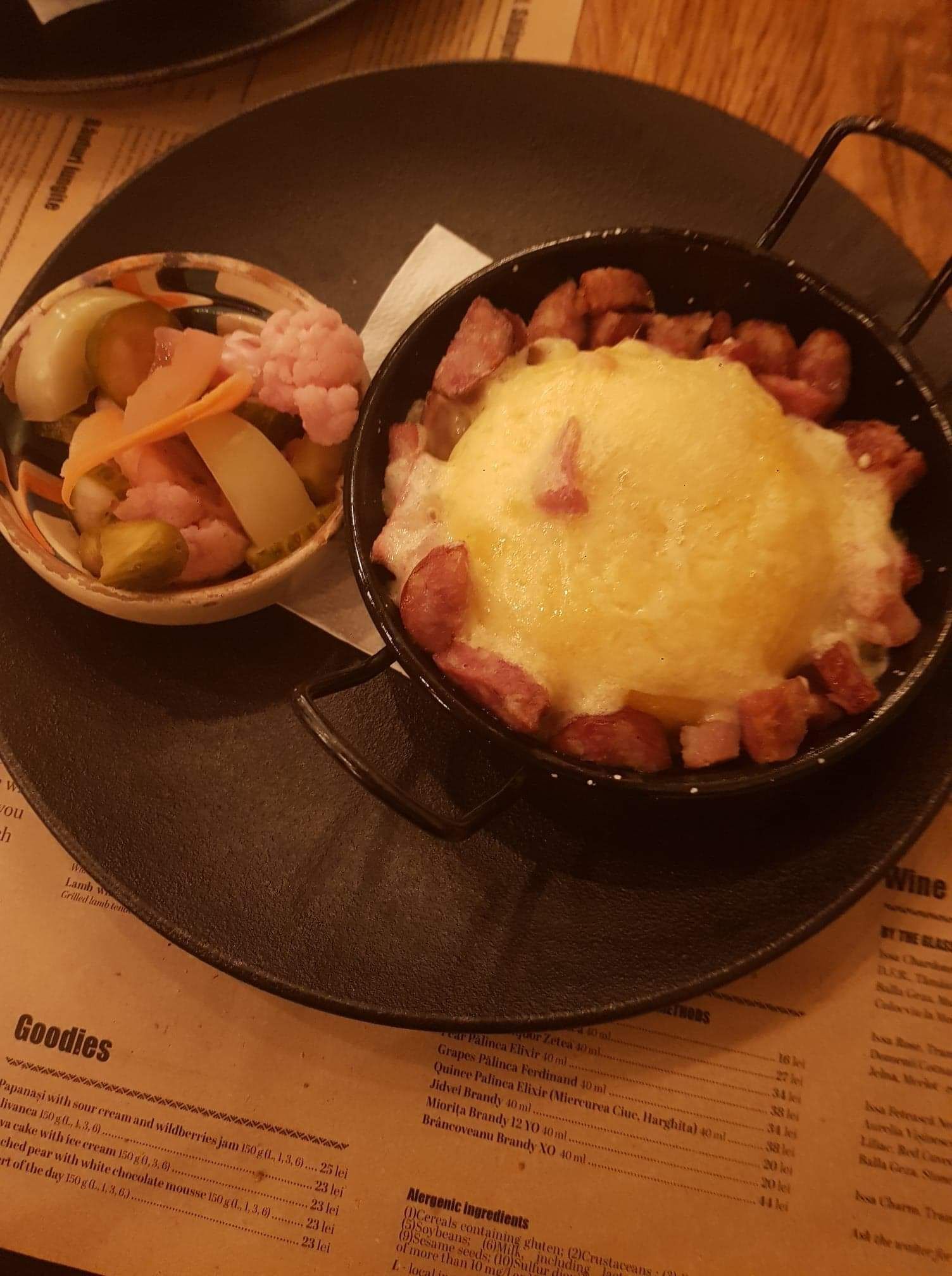
| Bulz | A ball of polenta stuffed or topped with sheep’s cheese, baked or grilled | A shepherds’ dish from the mountains; often comes with sausage or bacon |
| Tochitură | Pan-fried pork with polenta, cheese and a fried egg | Heavy, filling, best after a day outdoors |
| Goulash (gulaș) | Paprika beef or pork stew or soup | A Hungarian dish that is at home across Transylvania |
| Papanași | Fresh-cheese doughnuts, usually fried, in a ring topped with a small ball | Served with sour cream and jam, often sour cherry or wild berries |
| Kürtős (kürtőskalács) | Yeast dough wound around a spit, roasted over charcoal and rolled in sugar that caramelises | A Székely (Transylvanian Hungarian) speciality, first recorded in 1679; sold from street stalls and at the Christmas market |
| Cozonac | Sweet yeast bread, often swirled with walnuts or cocoa | Baked mainly for Christmas and Easter |
Sources for the dish descriptions: Wikipedia on mititei, papanași and kürtőskalács.
To drink
- Țuică and pălincă: plum (or other fruit) brandies, often offered as an aperitif. Pălincă is the stronger, double-distilled version.
- Afinată: a sweet blueberry liqueur, common in mountain areas.
- Beer: Romanian lagers on draught almost everywhere, plus craft beer in the centre.
- Vin fiert: mulled wine, sold in winter and at the Christmas market.
Local specialities around Brașov
- Sheep’s cheese from the mountains. The villages around Bran and Moieciu are known for brânză de burduf, a strong, salty sheep’s cheese traditionally packed in a sheep’s-stomach casing or in fir bark. You’ll find it at the city’s markets and at roadside stalls on the way to Bran (see how to reach Bran Castle).
- Smoked meats and sausages, sold at the markets and served on platters as a starter (platou).
- Kürtős, the Transylvanian Hungarian chimney cake, sold from stalls in the centre.
What a meal costs
These are crowd-sourced averages for Brașov from Numbeo, last updated on 2 October 2026 (50 contributors). They’re a guide to the range, not a menu; euro figures use a rate of about 5.2 lei to the euro.
| Item | Average | Range |
|---|---|---|
| Meal at an inexpensive restaurant | 52.50 lei (about €10) | 40–107 lei |
| Three-course meal for two, mid-range restaurant, no drinks | 250 lei (about €48) | 200–450 lei |
| Fast-food combo meal | 35 lei | 30–40 lei |
| Local draught beer, 0.5 l | 15 lei | 7–20 lei |
| Cappuccino | 17.29 lei | 14–25 lei |
| Bottled water, 0.33 l | 10.46 lei | 8–14 lei |
Two things to know when reading a Romanian menu: portions are listed by weight in grams, and side dishes such as mămăligă, potatoes or bread are often priced separately from the main.
Tipping and paying
- Tipping: around 10% is usual for table service when you’re happy; for a coffee or a drink at the bar, rounding up is enough.
- Cards are accepted in most restaurants and cafés in the centre. If you want to leave the tip on the card, say so before the waiter runs the payment; otherwise leave it in cash.
- Markets and small stalls often prefer cash; carry some small notes.
Vegetarian and vegan food
Romanian cooking is meat-heavy, but there’s an easy shortcut: dishes marked “de post” follow the Orthodox fasting rules, which exclude meat, dairy and eggs, so they’re vegan by default. Many restaurants list them, especially in the weeks before Christmas and Easter. Look for:
- fasole bătută (bean purée with fried onions) and zacuscă (roasted aubergine and pepper spread)
- ciorbă de legume (vegetable sour soup); ask whether it’s made with meat stock
- sarmale de post (cabbage rolls with rice and mushrooms)
- ghiveci (vegetable stew) and mushroom dishes
Vegetarians who eat dairy have more choice: mămăligă cu brânză și smântână, bulz without the sausage, salads with telemea cheese and, of course, papanași.
Markets and street food
- Farmers’ markets: for cheese, smoked meats, honey and seasonal fruit and vegetables, go to the city’s markets; our farmers’ markets guide covers Piața Astra, Piața Dacia and the others.
- Christmas market: in December the Brașov Christmas market in Piața Sfatului is the easiest place to try kürtős, mulled wine and grilled sausages in one go.
- Bakeries: covrigi (baked bread rings with salt or seeds) and plăcinte (pastries filled with cheese, apples or cherries) are the cheap snack between sights.
How to find a good place to eat
For named restaurants, see our guide to where to eat in Brașov. Wherever you end up, these checks help:
- Compare menus before you sit down, including a street or two away from Piața Sfatului.
- Look for a weekday lunch menu (meniul zilei), a fixed soup-and-main lunch that many restaurants offer.
- Read recent reviews from the last few months, not the overall score; kitchens and owners change.
- Book ahead for Friday and Saturday dinner, especially in December and in the ski season.
- Check that the menu has prices and gram weights, and ask about the price of fish or anything sold by weight before you order.
For a full day around the food, pair lunch in the Old Town with a walk; see things to do in Brașov. On a wet day, our rainy-day guide has more indoor ideas.
FAQ
What food is Brașov known for?
Romanian and Transylvanian staples: ciorbă (sour soup), sarmale, mici, bulz with sheep’s cheese and papanași, plus Hungarian-influenced dishes such as goulash and kürtős (chimney cake). Sheep’s cheese from the Bran–Moieciu villages is a well-known local product.
How much does a meal cost in Brașov?
About 52.50 lei a person at an inexpensive restaurant, and about 250 lei for a three-course dinner for two at a mid-range restaurant before drinks (Numbeo, October 2026). A beer costs about 15 lei and a cappuccino about 17 lei.
Do you tip in restaurants in Romania?
Yes, around 10% for table service is usual. Tell the waiter before they run your card if you want to add the tip to the payment.
Is it easy to eat vegetarian or vegan in Brașov?
Easier than you might expect: dishes marked “de post” contain no meat, dairy or eggs. Ask whether soups are made with meat stock.
What is kürtős and where can I buy it?
Kürtős (kürtőskalács, or chimney cake) is sweet yeast dough wound around a spit, roasted over charcoal and coated in caramelised sugar. It’s sold from street stalls in the centre and at the Christmas market.
Sources
- Numbeo: cost of living in Brașov, restaurant prices updated 2 October 2026, checked 10 October 2026
- Wikipedia: Mititei, Papanași, Kürtőskalács


