



On this page
- If you only have one day
- Brașov in two minutes: a short history
- The Old Town: sights inside the walls
- Tâmpa: the cable car or the trail
- Șchei: St Nicholas Church and the First Romanian School
- Walks along the walls: Aleea de sub Tâmpa and the Graft brook
- Prices and opening hours at a glance
- Fortified churches: Prejmer and Hărman
- Poiana Brașov
- Day trips from Brașov
- What to eat in Brașov
- With kids, in the rain or in winter
- Getting around and practical tips
- Where to go next
- FAQ
- Sources
Strada Sforii has been closed for safety repairs since November 2025, with no reopening date, so the one-day route now goes from the Black Church straight to Catherine's Gate. The Black Church is closed on Mondays 2, 9 and 16 November.
The best things to do in Brașov are in or just outside the walled Old Town. Start in Piața Sfatului, go into the Black Church (30 lei), walk past the gates, towers and bastions, and take the Tâmpa cable car (45 lei return) for the view. Then carry on into Șchei. If you have extra days, spend them on Bran, Râșnov, Prejmer or Peleș Castle.
This guide contains affiliate links. If you book through them, we earn a commission at no extra cost to you. How we work
Advertisement
Brașov is small and easy to walk. From Piața Sfatului it’s a two-minute walk to the Black Church, about 12 minutes to the Tâmpa cable car and about 15 to Șchei. So you can see the main sights in a day without a car, which is why the one-day route comes first. If you’re still deciding how long to stay, our guide to how many days you need in Brașov has full 1-, 2- and 3-day itineraries.
If you only have one day
This route takes you round the Old Town, Șchei and Tâmpa on foot. The walking times are rounded figures from OpenStreetMap routing, so allow extra for photos and for the climb up to the White Tower. One famous stop is missing: Strada Sforii, the narrow street, has been closed for safety repairs since November 2025. We checked every price and opening time on this page on 10 October 2026.
| Time | Stop | Walk from the previous stop | Adult ticket |
|---|---|---|---|
| 09:30 | Piața Sfatului and the Council House (outside) | start | free |
| 10:00 | Black Church (opens 10:00 Tuesday–Saturday, 12:00 Sunday and Monday) | 2–3 min | 30 lei |
| 11:00 | Catherine’s Gate and Schei Gate, along Strada Poarta Schei | 8 min | free |
| 11:30 | Șchei: St Nicholas Church and the First Romanian School | 10 min | museum 20 lei |
| 13:00 | Lunch back in the Old Town | 15 min | |
| 14:30 | Black Tower and White Tower, along Strada După Ziduri | 10 min | free from outside |
| 15:30 | Council House: County History Museum (closed Mondays) | 5 min | 12 lei |
| 16:45 | Weavers’ Bastion (closed Mondays, last ticket 17:30) | 10 min | 10 lei |
| 17:30 | Aleea de sub Tâmpa to the cable car, ride up | 10–12 min | 45 lei return |
| Evening | Dinner around Piața Sfatului or Strada Republicii |
If you go into everything, tickets for the day come to about 117 lei per adult. Skip the Council House and the Weavers’ Bastion and it’s 95 lei.
On a Monday, the Council House museum and the Weavers’ Bastion are closed, and the Black Church doesn’t open until 12:00. So turn the day around. Start in Șchei, because the First Romanian School opens at 10:00 on weekdays, then see the Black Church after midday and finish on Tâmpa. On a Sunday, the First Romanian School is only open from 12:00 to 14:00, after the church service.
Brașov in two minutes: a short history
Brașov’s German name, Kronstadt, and its Latin one, Corona, both refer to a crown. The town is older than the walls you see today. In 1211 King Andrew II of Hungary handed the Burzenland (Țara Bârsei), the plain around Brașov, to the Teutonic Order to guard the border. The knights built forts here, but in 1225 the king threw them out.
Brașov itself grew out of the settlements that German-speaking colonists, the Saxons, founded in the area. It first appears in writing, as Corona, in 1235. You’ll often read that the Teutonic Knights “founded” Brașov, but that’s too simple. They held the region for 14 years. The town was built by the Saxon merchants and craftsmen who stayed.
Those merchants grew rich on trade between Central Europe, Wallachia and the Ottoman lands. Their guilds built and defended the walls, and that’s why the bastions have names like Weavers’ and Drapers’. Romanians lived outside the walls, in Șchei, where they built St Nicholas Church and the first Romanian school.
The Great Fire of 21 April 1689 destroyed most of the walled town, and the smoke gave the Black Church its name. In the 20th century the city was renamed Orașul Stalin (Stalin City) from 1950 to 1960. Then, on 15 November 1987, Brașov’s workers staged one of the first open revolts against the Ceaușescu regime.
The Old Town: sights inside the walls
The Old Town is the part of Brașov the walls once enclosed, between Tâmpa to the east and the Warthe hill to the west. You’ll see it called Centrul Istoric, and locals often just say “Cetate” (the citadel). Everything in this section is within a 10-minute walk of Piața Sfatului.
Piața Sfatului and the Council House
Piața Sfatului (Council Square) is the heart of the Old Town and the obvious place to start. Old merchants’ houses line the square, and in December it’s home to the city’s Christmas market.
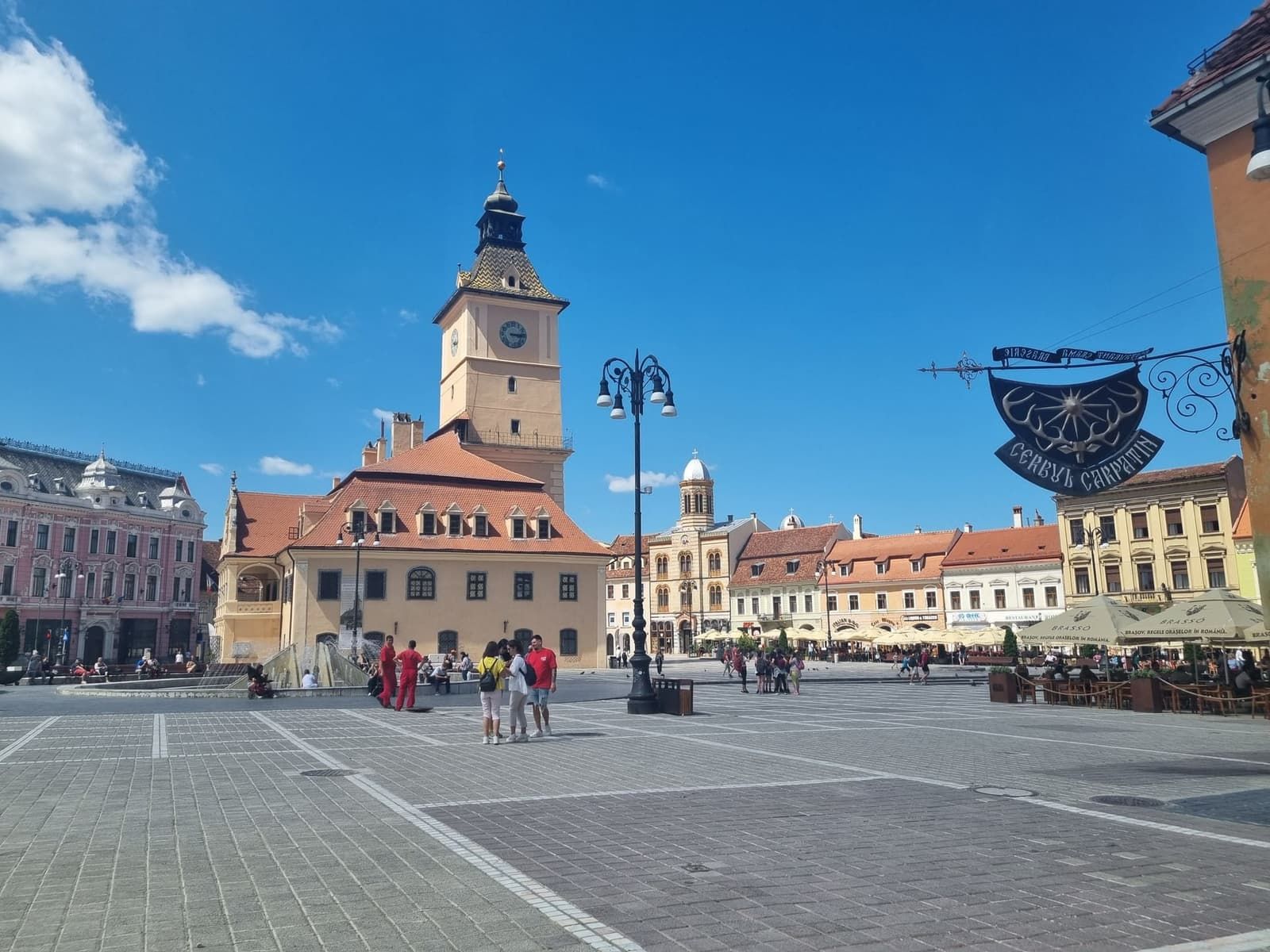
The building in the middle is the Council House (Casa Sfatului), Brașov’s old town hall. The County History Museum, which now fills the building, dates the town council’s first room here to 1420, above a vault used by the furriers’ guild.
The tower went up in 1521–1528. It became known as the Trumpeters’ Tower, after the watchman who kept lookout from the top. The building got most of its present look in 1770–1778, and the colourful pyramid roof dates from 1909–1910. The city administration moved out in 1876.
Inside is the Brașov County History Museum, with a permanent exhibition on the city’s history and temporary shows that change.
- Tickets: adults 12 lei, pensioners 5 lei, pupils and students 2 lei; free for people with disabilities.
- Hours: Tuesday–Sunday 10:00–18:00, last ticket 17:30. Closed on Mondays.
- Source: Brașov County History Museum, checked 10 October 2026.
The Black Church
The Black Church (Biserica Neagră) towers over the Old Town, and it’s the one sight almost everyone goes inside. Work on it began in the late 14th century and took almost a hundred years. It started life as St Mary’s Church and became Brașov’s Lutheran (Evangelical) parish church after the Reformation. The fire of 1689 brought down the roof and, as local tradition has it, blackened the walls, which gave the church its name.
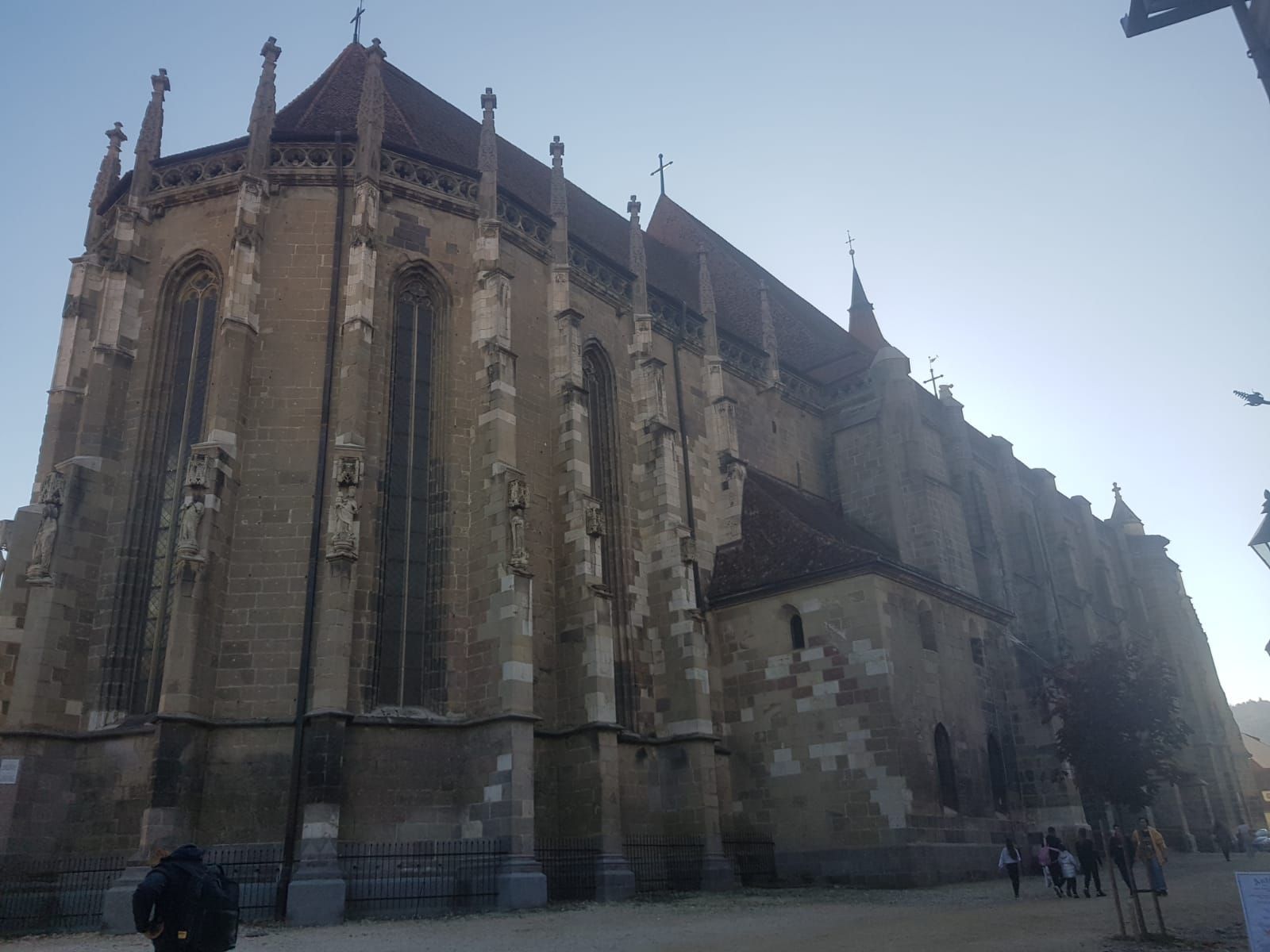
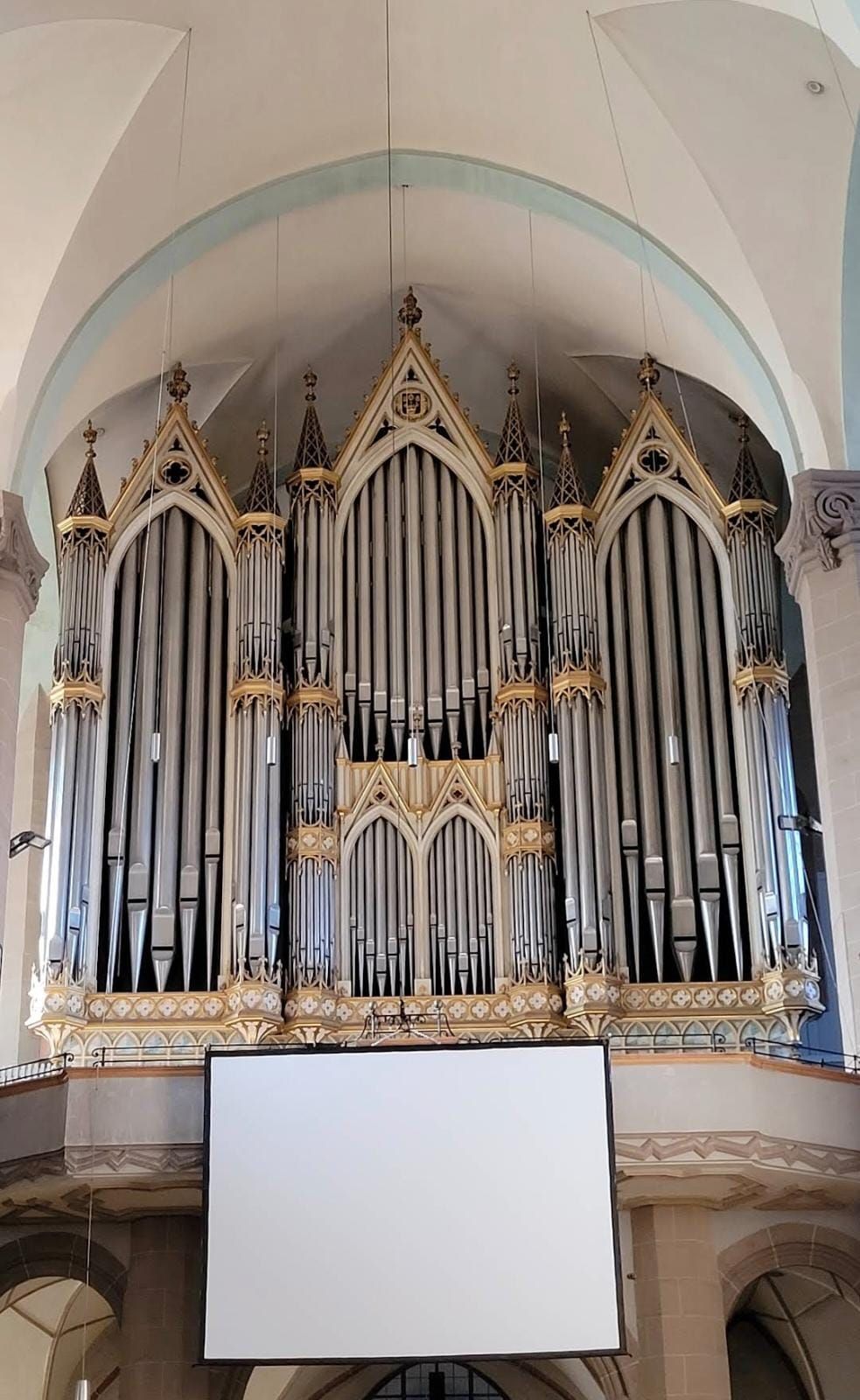
Inside, look out for the collection of around 200 Anatolian carpets, the bronze baptismal font from 1472 and the organ. Carl August Buchholz of Berlin built the organ in 1836–1839. It has 3,993 pipes and four keyboards, and the church calls it the largest mechanical organ in Romania.
- Tickets: adults 30 lei; pensioners and university students 25 lei; school pupils up to 18 20 lei; free for children under 7.
- Hours, 16 October–March: Tuesday–Saturday 10:00–18:00, Sunday and Monday 12:00–18:00.
- Hours, April–15 October: Tuesday–Saturday 10:00–19:00, Sunday and Monday 12:00–19:00.
- Closed on 1 January and 25 December. In 2026 it’s also closed on Mondays 2, 9 and 16 November for autumn cleaning. The church closes to visitors for about two hours during concerts, christenings and weddings too, and posts these on its homepage two or three days ahead. Last entry is called 20 minutes before closing.
- Concerts: in the 2026 season, organ concerts (“Organ Nights”) were on Saturdays at 18:00. Tickets were 35 lei, with free entry for under-18s. The last concert of the series was on 17 October 2026.
- Source: Black Church visiting hours and fees and events, checked 10 October 2026.
For the full story, from the Honterus statue in the churchyard to the carpets, read our guide to the Black Church.
Strada Sforii (Rope Street)
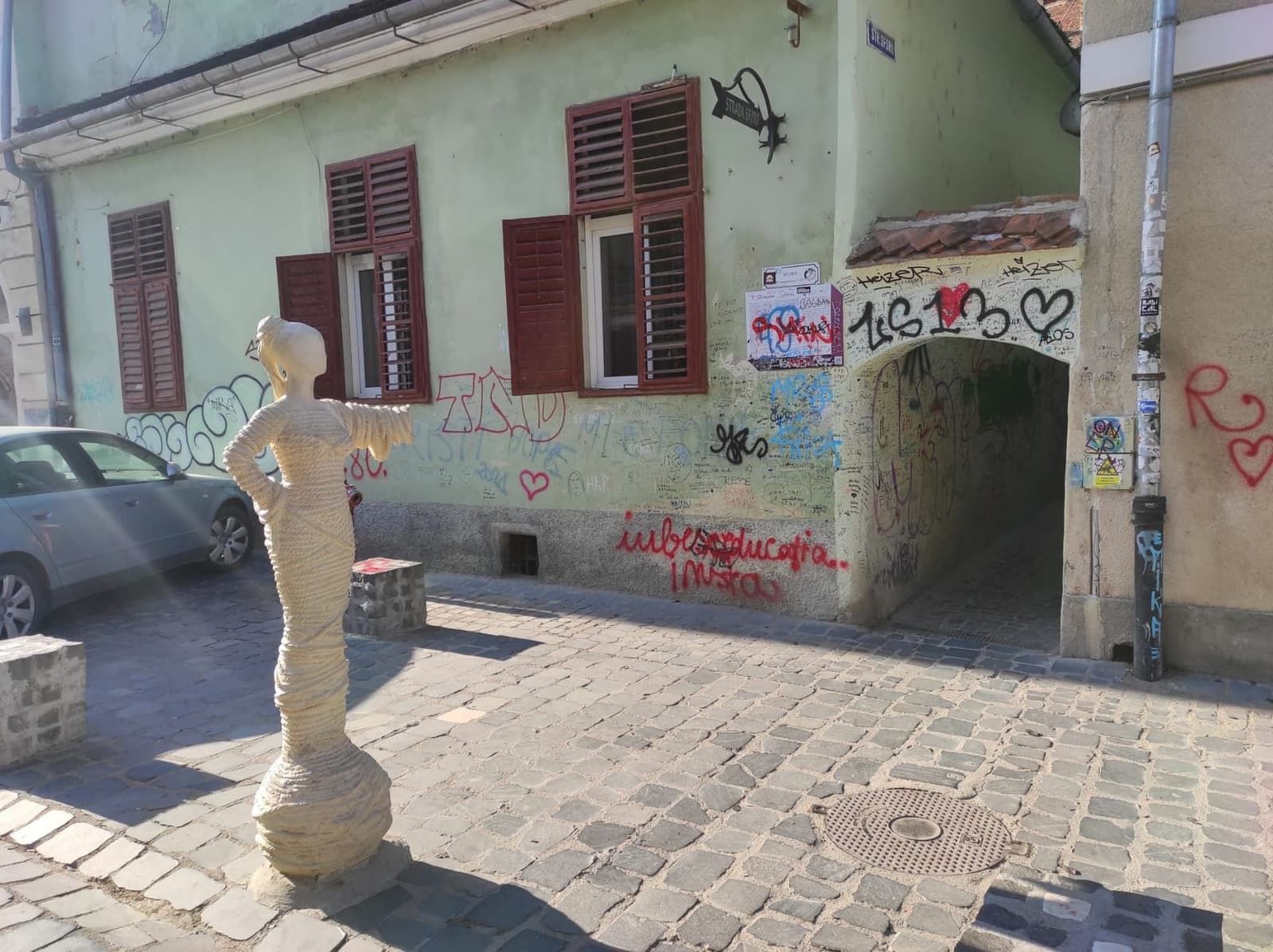
Closed since November 2025. City Hall shut the street for safety after plaster started falling off the walls on both sides. In September 2026 it awarded a 2.11 million lei contract for the repairs. No reopening date had been announced when BizBrașov reported on 24 September 2026.
Strada Sforii is a passage linking Strada Poarta Schei and Strada Cerbului. It’s about 80 m long and only 1.11 to 1.35 m wide, and it’s often described as one of the narrowest streets in Europe. It first turns up in 17th-century documents as an access lane for firefighters. When it’s open, it’s free and takes five minutes. It’s also the most photographed spot in town, so don’t expect to have it to yourself in the middle of the day.
Catherine’s Gate and Schei Gate
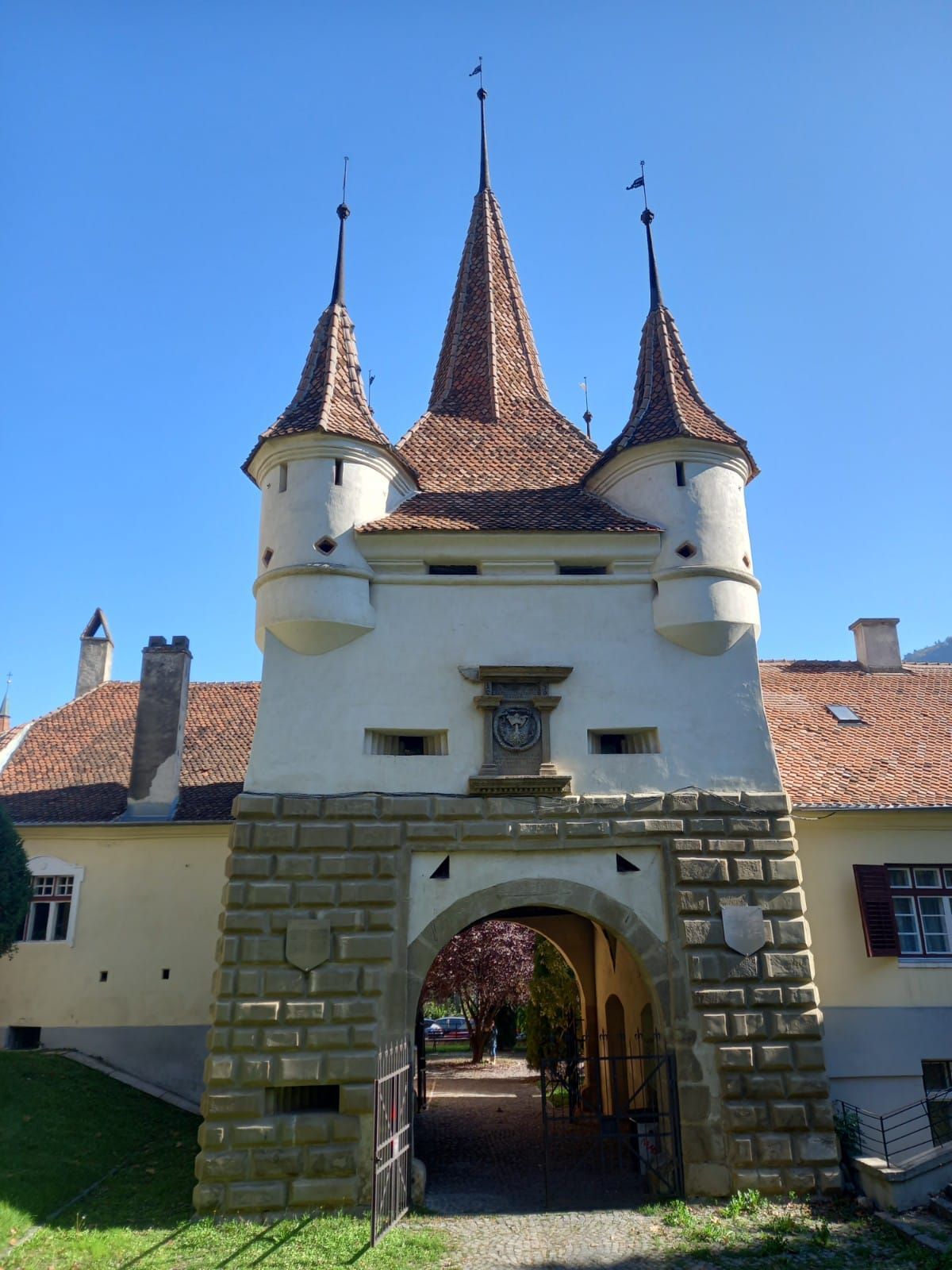
Two gates stand a few metres apart at the south-western edge of the Old Town. Catherine’s Gate (Poarta Ecaterinei) is the only original medieval city gate still standing. The tailors’ guild built it in 1559. Its four small corner turrets showed that the town had its own judicial authority, the “right of the sword”.
Next to it, the plainer Schei Gate (Poarta Șchei) was built in 1827. For centuries the gates here marked the line between the Saxon town inside the walls and the Romanian suburb of Șchei outside them. You can see both from outside for free.
The Black Tower, the White Tower and the Graft
For the best free views over the Old Town, head to the western side, above Strada După Ziduri (the name means “behind the walls”) and the Graft brook. The Black Tower (Turnul Negru) is a 15th-century watchtower. It turned black when a lightning strike set it on fire, and a restoration in the 1990s gave it a glass roof.
A short climb further up is the White Tower (Turnul Alb), the highest point of the old fortifications. From here you look straight across the rooftops to the Black Church and Tâmpa. Below it, the Graft Bastion was built in 1515–1521 to connect the White Tower to the town. The museum lists it as closed at the moment.
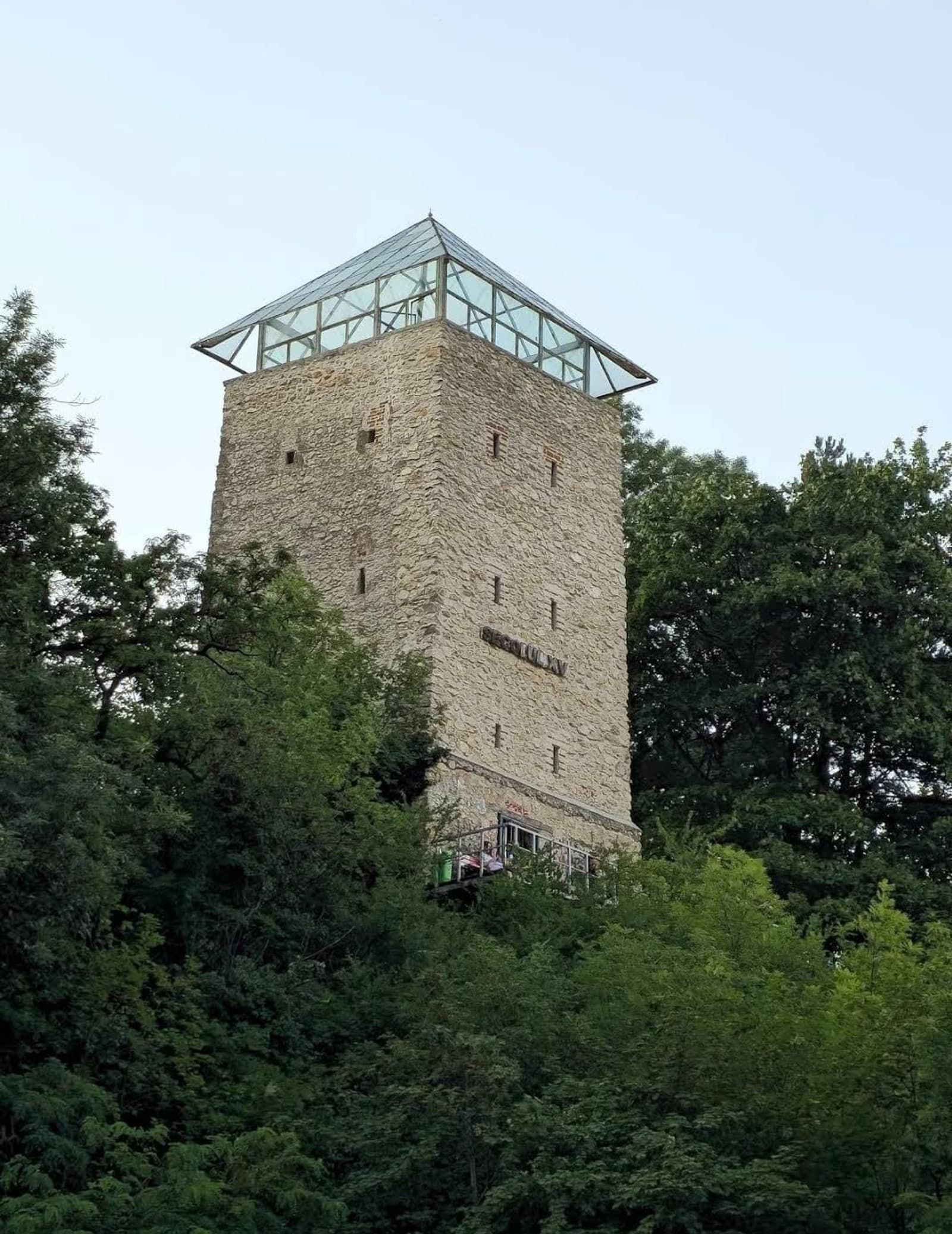
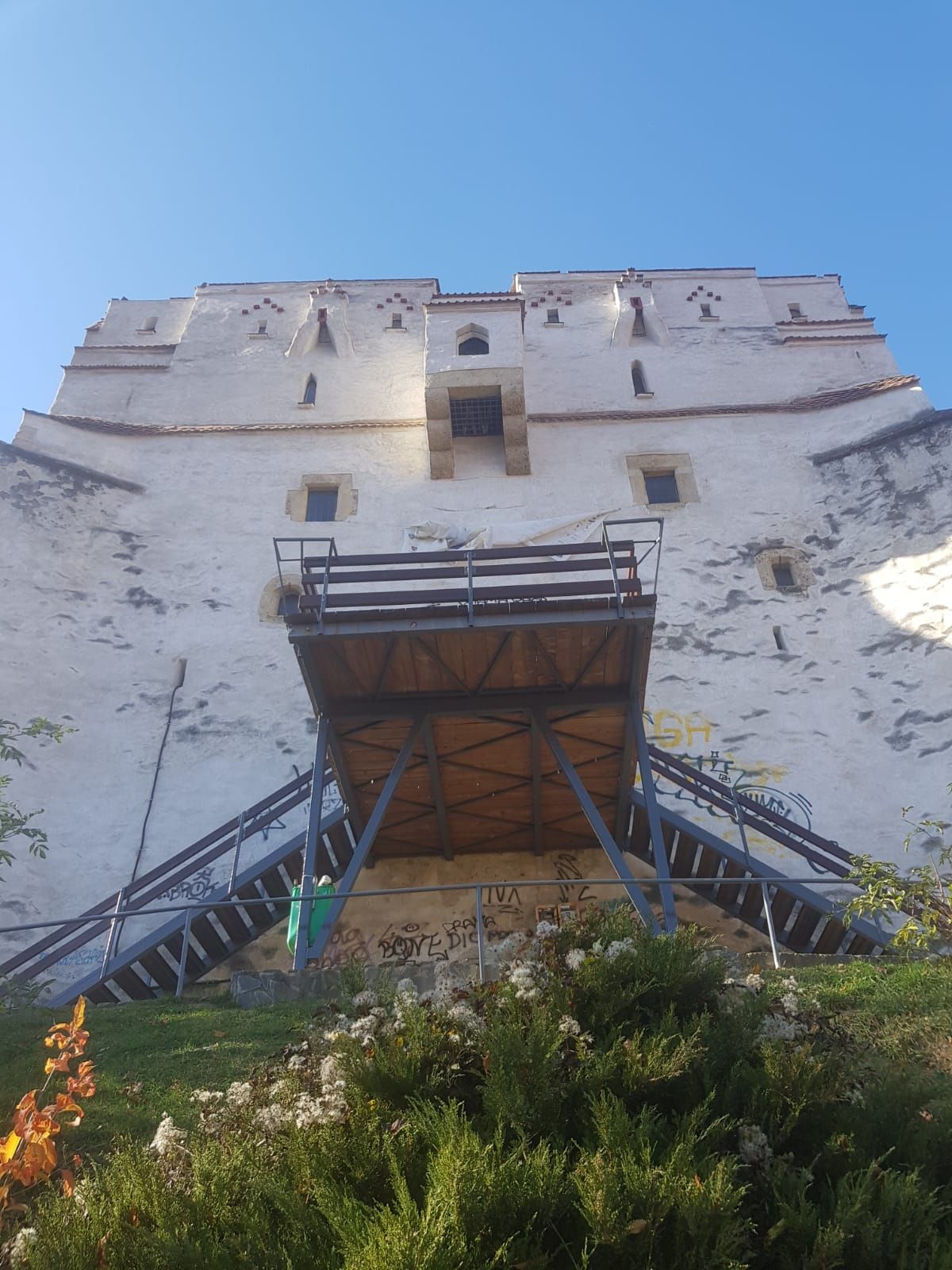
From Catherine’s Gate it’s a 7-minute walk along the walls to the Black Tower, then 4 minutes more up a steep path and steps to the White Tower. Even if the towers are closed, the view from outside makes the walk worth it.
Weavers’ Bastion
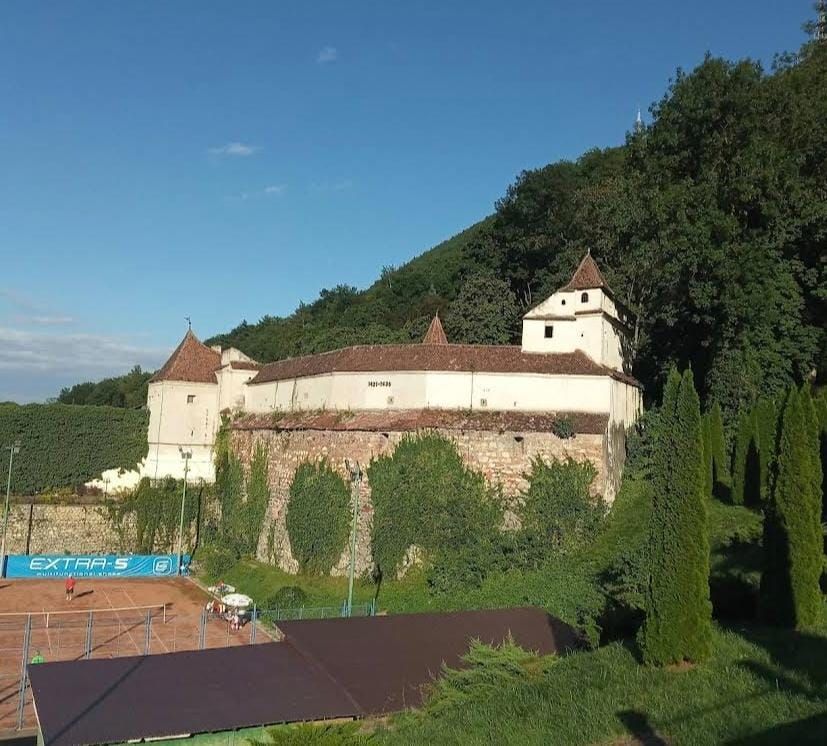
The Weavers’ Bastion (Bastionul Țesătorilor), at Strada George Coșbuc 9, is one of the best-preserved parts of the city’s defences. It was built in two stages, in 1421–1436 and 1570–1573, with three levels of wooden firing galleries. After a restoration in 1910 it became a museum.
Today it holds the exhibition “Brașovul/3 M”, built around scale models of the city. Among them is the model of medieval Brașov that the museum’s staff made in 1961. Nothing shows you more clearly how the walled town worked.
- Tickets: adults 10 lei, pensioners 5 lei, pupils and students 2 lei.
- Hours: Tuesday–Sunday 10:00–18:00, last ticket 17:30. Closed on Mondays.
- Source: Brașov County History Museum, checked 10 October 2026.
Our guide to Brașov’s landmark buildings goes into more detail on the Council House, the gates and the towers. For the other collections in town, see the museums guide.
Tâmpa: the cable car or the trail
Tâmpa is the wooded mountain that rises straight out of the Old Town, with the white BRAȘOV letters near the top. From the upper station the whole city is laid out below you: the walls and the Black Church right underneath, Șchei in the valley to the west and the newer city spreading out across the plain.
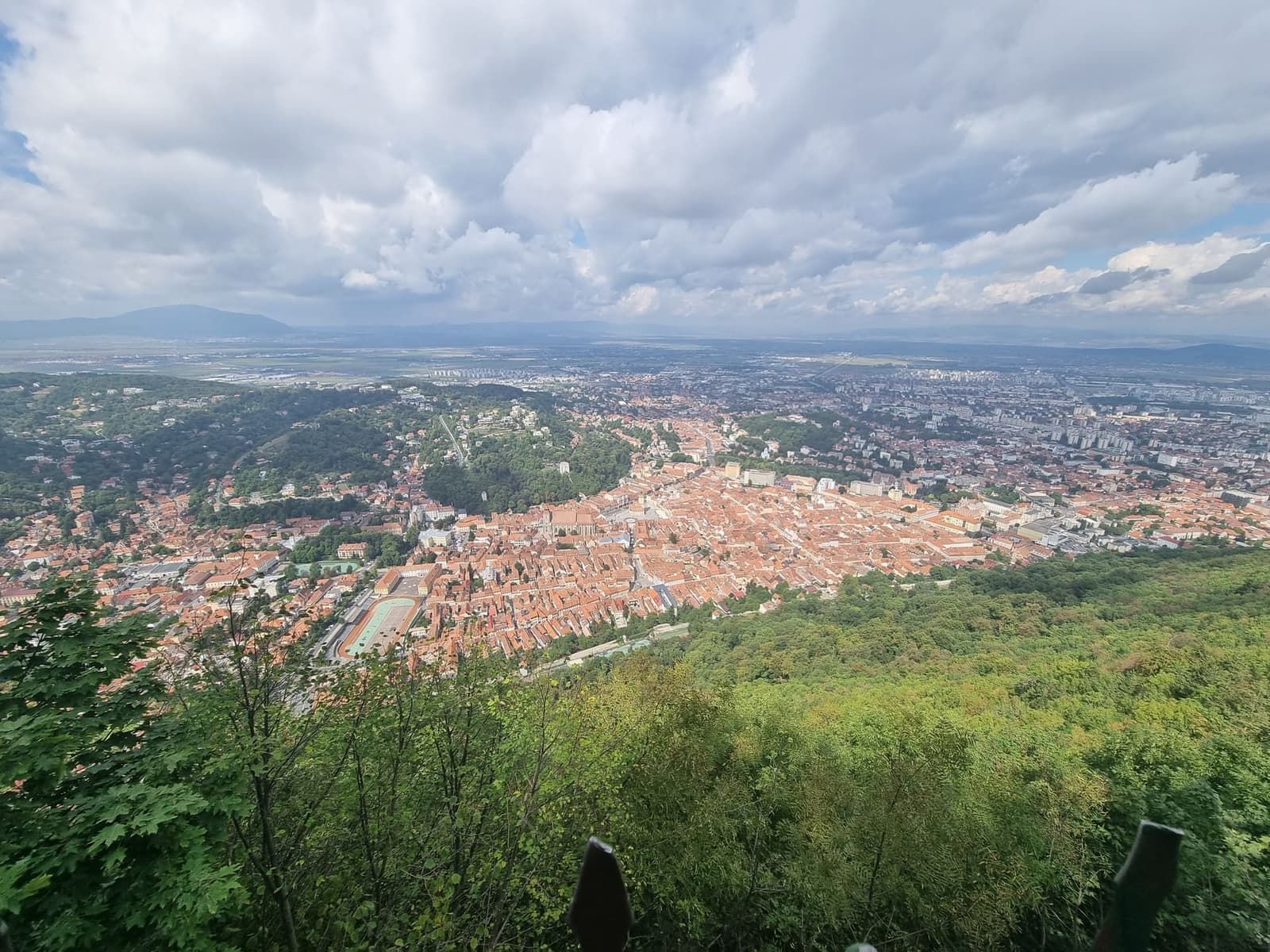
The cable car (Telecabina Tâmpa) leaves from Aleea Tiberiu Brediceanu, about 12 minutes on foot from Piața Sfatului. The line is 573 m long and climbs 320 m to an upper station at 960 m. Each cabin holds 25 people, and the ride takes about two minutes.
| Adult | Child 6–12 | |
|---|---|---|
| Return | 45 lei | 30 lei |
| One way (up or down) | 30 lei | 20 lei |
- Hours: Monday 12:30–22:00; Tuesday–Thursday 10:30–22:00; Friday and Saturday 10:30–22:30; Sunday 10:30–22:00.
- Free for passengers with reduced mobility, with ramp and lift access.
- Queues: at busy times the average wait is about 30 minutes.
- Source: Telecabina Tâmpa, useful information, checked 10 October 2026.
On foot, the trails start in the park along Aleea Tiberiu Brediceanu, close to the cable car. The usual route is the Serpentine Road (Drumul Serpentinelor), marked with a red triangle. It’s about 3 km with 380 m of climbing, and takes 1 h 15 to 1 h 30 to the top. It’s a forest path with long switchbacks rather than a technical hike, but wear proper shoes after rain or snow.
If you only want to walk one way, ride up and walk down.
At the top you’ll find the Panoramic restaurant, the viewing area and, a few minutes away, the BRAȘOV letters. Go in the late afternoon for the evening light. On days of low cloud, though, give it a miss: the summit sits in fog.
Șchei: St Nicholas Church and the First Romanian School
Go through Schei Gate and walk uphill for about 10 minutes, and you’re in Șchei (Șcheii Brașovului), the historic Romanian quarter. At its heart is Piața Unirii, with St Nicholas Church and, in the churchyard, the First Romanian School. If you’d rather not walk, city bus 4 also comes here from Livada Poștei and the Biserica Neagră stop.
St Nicholas Church (Biserica Sfântul Nicolae) is the Orthodox church of the old Romanian community. Vlad Călugărul, a former ruler of Wallachia, began the stone church in 1495. From 1519 it was enlarged with money and masons sent by another Wallachian prince, Neagoe Basarab. You’re welcome to look round outside service times. Dress as you would for any church.
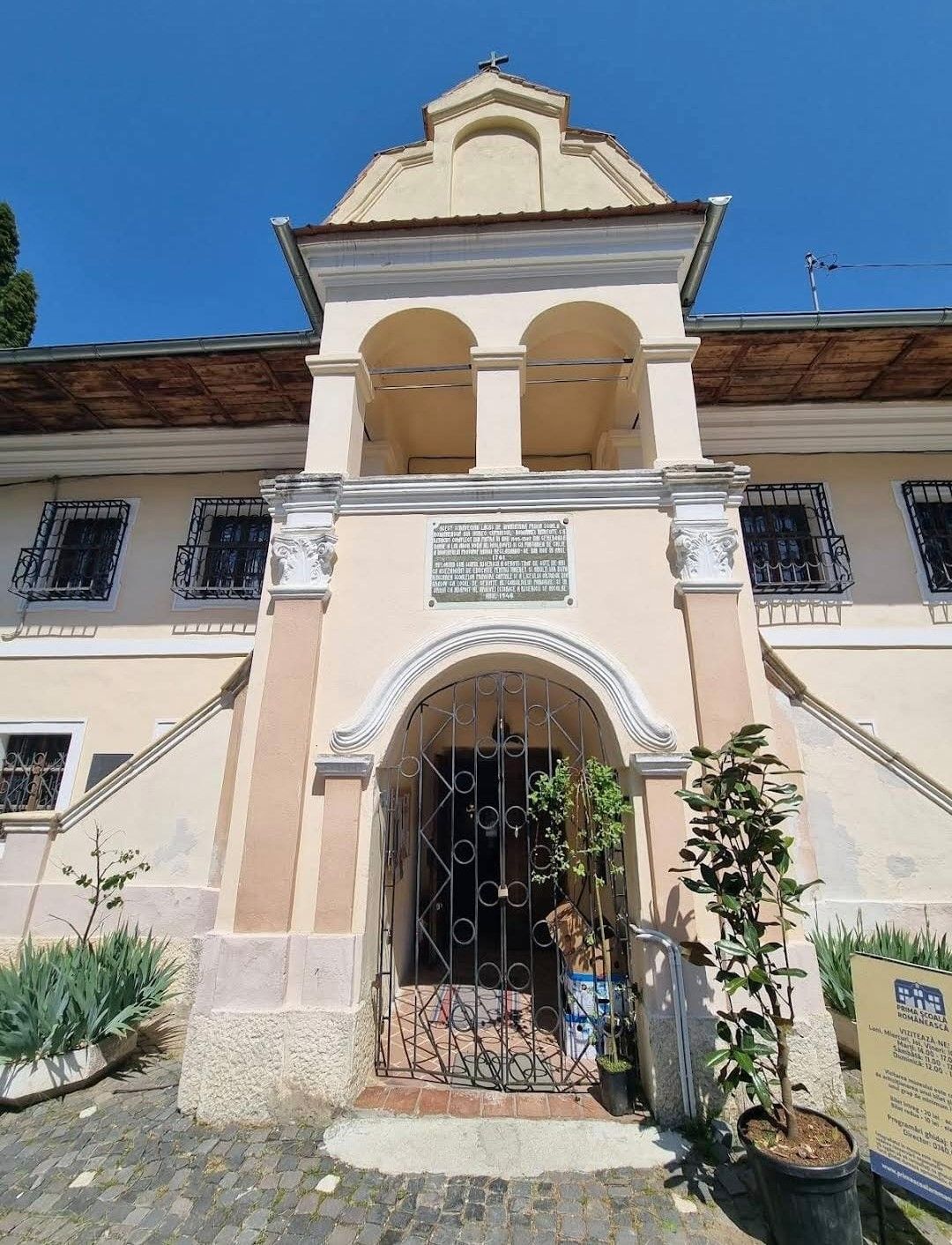
The First Romanian School (Prima Școală Românească) is now a museum in the churchyard. The museum dates the school itself to 1495 and the present building to 1760. Inside you’ll find a classroom with old benches, plus old books and the story of printing here. In the 16th century, Deacon Coresi printed some of the first books in the Romanian language in Brașov.
- Tickets: adults 20 lei, pupils and students 10 lei, children under 6 free.
- Hours: Monday–Friday 10:00–17:00, Saturday 11:00–17:00, Sunday 12:00–14:00, because on Sundays and church holidays it opens after the service. Last entry 16:30.
- Address: Piața Unirii 2–3.
- Source: First Romanian School museum, checked 10 October 2026.
Piața Unirii is also where the Junii parade sets off, on the Sunday after Orthodox Easter. Riders from Șchei, in traditional costume, ride through the city. The next one should be on 9 May 2027, and our Junii guide has the details.
Walks along the walls: Aleea de sub Tâmpa and the Graft brook
Two paths follow the old walls on either side of the Old Town, and together they make a good loop.
- Aleea de sub Tâmpa (“the path under Tâmpa”), officially Aleea Tiberiu Brediceanu, is the pedestrian promenade at the foot of Tâmpa, on the south-eastern side. It runs under the trees between the walls and the mountain, past the bastions, to the cable car station and the trailheads.
- The Graft brook runs along the western walls. Follow Strada După Ziduri from Catherine’s Gate past the Black Tower to the Graft Bastion, with the White Tower above you.
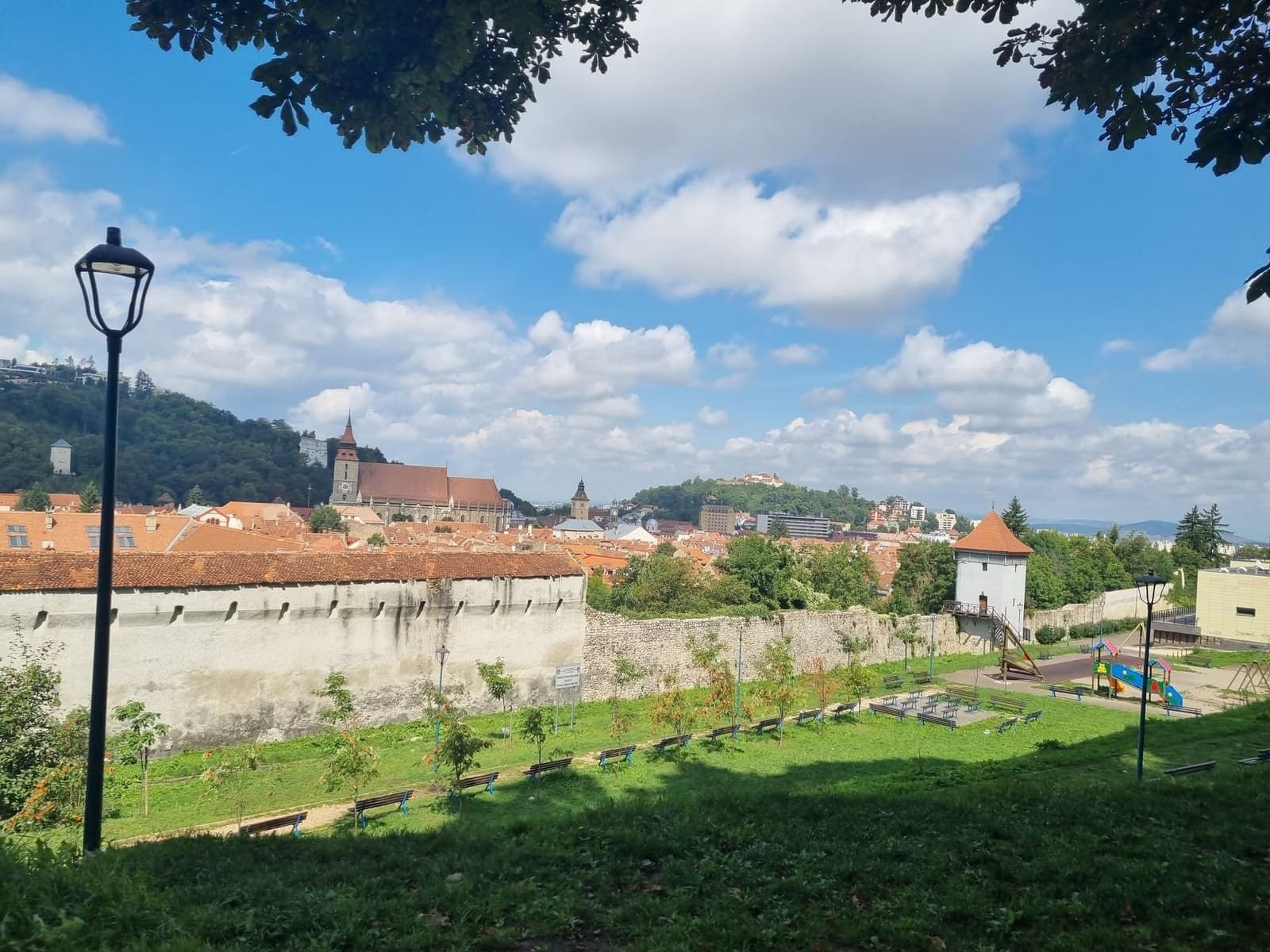
For a loop, start at Catherine’s Gate and follow the Graft to the towers. Then come back through Piața Sfatului and head out along Aleea de sub Tâmpa to the cable car. That’s about 3.5 km, or an hour at an easy pace if you don’t stop. For more routes, including Tâmpa and the walk towards Poiana, see our guide to walks in Brașov.
Prices and opening hours at a glance
Prices are for one adult, in lei. We checked them all against the sources linked above on 10 October 2026.
| Sight | Adult ticket | Opening hours |
|---|---|---|
| Black Church | 30 lei | Tue–Sat 10:00–18:00, Sun–Mon 12:00–18:00 (until 19:00 April–15 October) |
| Council House (County History Museum) | 12 lei | Tue–Sun 10:00–18:00, closed Mon |
| Weavers’ Bastion | 10 lei | Tue–Sun 10:00–18:00, closed Mon |
| First Romanian School | 20 lei | Mon–Fri 10:00–17:00, Sat 11:00–17:00, Sun 12:00–14:00 |
| Tâmpa cable car | 45 lei return, 30 lei one way | Mon 12:30–22:00, Tue–Sun from 10:30 to 22:00 (22:30 Fri–Sat) |
| Gates, towers from outside | free | always open |
| Strada Sforii | free | closed for repairs since November 2025 |
| City bus (RATBV) | 5 lei per 90-minute trip | free on Fridays on city lines |
Planning to see several museums? The Brașov Visit Ticket, sold on Booktes, covers 12 sites, including the Black Church, the History Museum, the Weavers’ Bastion and the First Romanian School. It’s valid for 90 days, with one entry at each site. An adult ticket costs 57.76 lei. Students and pensioners pay 42.01 lei, and pupils 21.01 lei.
Advertisement
Fortified churches: Prejmer and Hărman
The Saxon villages around Brașov fortified their churches against raids, and two of the best are within half an hour of the city.
Prejmer (Tartlau), 18 km north-east of Brașov, has one of the largest fortified churches in Transylvania. It’s on the UNESCO World Heritage list, added in 1999 as part of the Villages with Fortified Churches in Transylvania. The Teutonic Knights began the church around 1218, and it was finished after they were expelled. Around it runs a ring wall nearly 12 m high, with more than 270 small rooms where villagers stored food and sheltered during sieges.
Hărman (Honigberg), 13 km from Brașov on the way to Prejmer, has a smaller fortified church. With a car you can see both in a morning.
By bus: RATBV line 520 runs from Terminal Gară, outside Brașov railway station, to Prejmer. A Brașov–Prejmer ticket costs 7 lei. There’s roughly one bus an hour on weekdays, and one about every two hours at weekends. For the ride back, the stop in Prejmer is called Biserica Fortificată (fortified church).
Line 511 runs from Terminal Gară to Hărman for 5 lei. It goes about every hour to hour and a half on weekdays, but only a few times at weekends. Check the RATBV timetables for exact times on the day you go.
Poiana Brașov
Poiana Brașov is the ski resort on the slopes of Postăvarul, about 1,000 m up. It’s 13 km from the city by road, around 20 minutes by car. In winter it’s the closest place to ski, and our guide to skiing near Brașov covers the slopes and lift passes. The rest of the year it’s a base for walks on Postăvarul, and in summer a cooler escape from the city.
Without a car, take bus 20 from Livada Poștei, at the edge of the Old Town. On the timetable valid from 5 June 2026, it runs every 20 minutes from 07:00 to 19:00, then every 30 minutes until 23:30. An ordinary city ticket (5 lei) covers it, and on Fridays the ride is free.
Day trips from Brașov
Brașov makes the best base in the region. Bran, Râșnov and Prejmer are all less than 40 minutes away, and Peleș is an hour by train. Our day trips from Brașov page compares them all. Here’s the short version.
| Trip | Distance | By public transport | Main ticket (adult) | Time needed |
|---|---|---|---|---|
| Bran Castle | 30 km | Bus from Autogara 2, hourly, about 55 min, 15 lei | 100 lei | Half day |
| Râșnov (citadel closed; garden and tower open) | 16 km | RATBV bus 130 from Stad. Municipal, about 30 min, 7 lei | Garden and Báthory Tower 10 lei | 1–2 hours |
| Peleș Castle, Sinaia | 45 km by rail | Train, about 1 hour | 100 lei | Full day |
| Prejmer and Hărman | 18 km / 13 km | RATBV 520 / 511 from Terminal Gară | Paid on site | Half day |
| Seven Ladders Canyon | south-east, near Timișu de Jos | RATBV 17B to Dâmbul Morii, then about 1 hour on foot | 25 lei | Half day |
| Libearty Bear Sanctuary | 27 km | Train to Zărnești, then taxi | 95 lei (100 lei at weekends) | Half day |
| Sibiu | 143 km | Bus or train | — | Full day or overnight |
Bran Castle is the trip most people make. Transbus buses leave Autogara 2 every hour on the hour from 07:00 to 21:00, and the ride takes about 55 minutes. The last bus back leaves Bran at 19:38. A standard castle ticket is 100 lei for adults. The castle opens at 09:00 every day except Monday, when it opens at 12:00. Go early to beat the coach groups.
Our guide to getting from Brașov to Bran Castle has the timetable and the other options, and the Bran Castle guide covers tickets and what’s inside.
Râșnov is on the same road, 13 km before Bran, so it’s easy to add on. The citadel itself, though, has been closed for restoration since 2020, and the town hall plans to reopen it in stages from 2028. What you can visit is the garden in front of the walls and the Báthory Tower. The ticket costs 10 lei, you can only pay by card, and under-12s go free. The inclined lift up the hill is 40 lei return.
Peleș Castle in Sinaia is the royal palace, with some of the finest interiors in Romania. The train from Brașov takes about an hour. The castle is open Wednesday to Sunday only, and adult tickets cost 100 lei. It’s closed from 2 November to 1 December 2026. See our Peleș Castle guide.
Seven Ladders Canyon is a short gorge you climb on metal ladders beside small waterfalls. Entry is 25 lei. In season it’s open daily from 10:00, with last entry at 16:00. It closed for the cold season on 26 October 2026 and is due to reopen in May 2027. It’s not for anyone afraid of heights, so read the Seven Ladders Canyon guide before you go.
Libearty Bear Sanctuary, outside Zărnești, is home to more than 130 bears rescued from captivity. You can only visit on a guided tour, Tuesday to Sunday, and you book online. The walk into the Zărnești Gorge, in the Piatra Craiului mountains, also starts in Zărnești, so it makes sense to combine the two. See our Libearty guide.
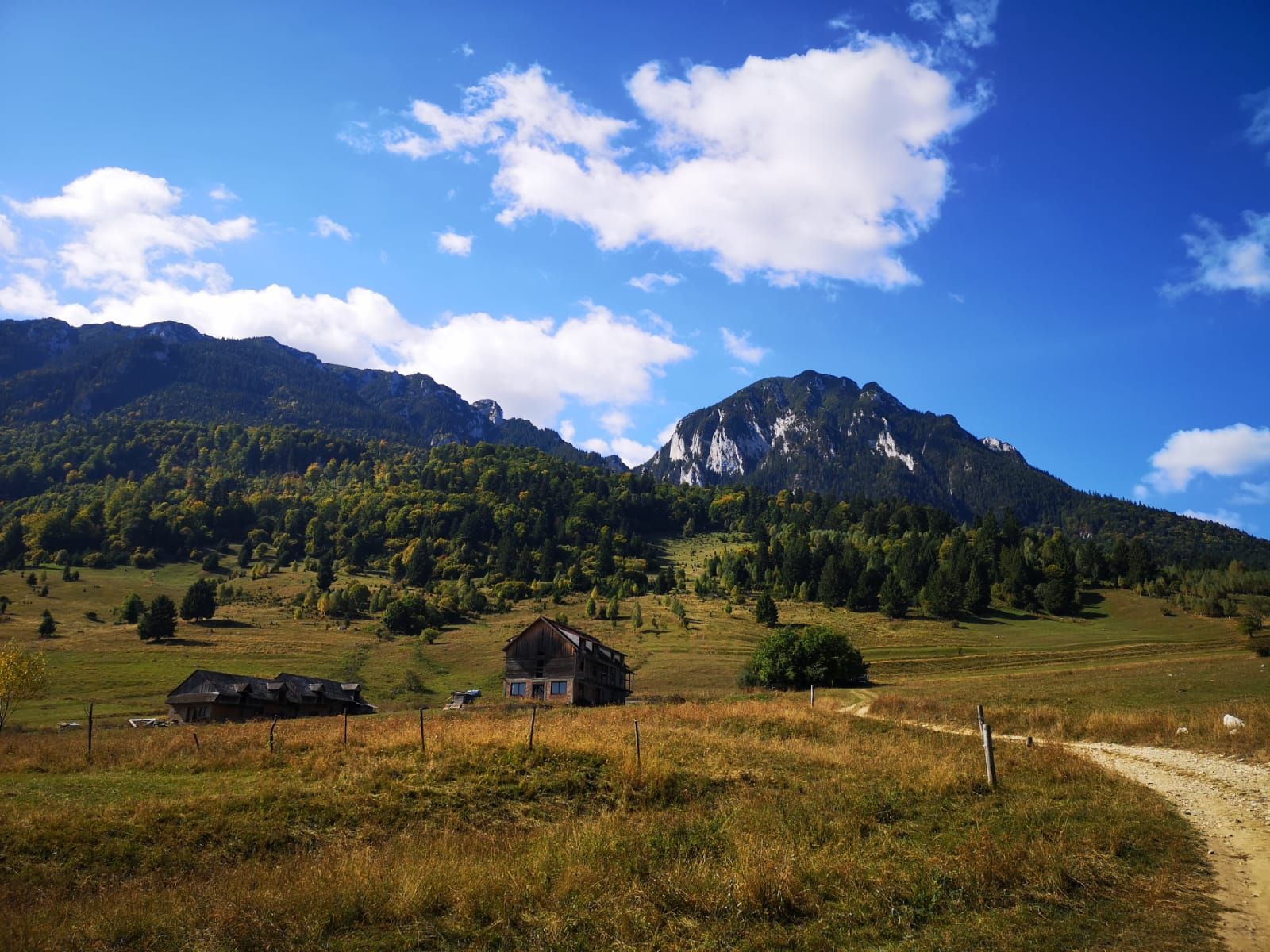
Sibiu (Hermannstadt) is the other great Saxon city, 143 km to the west, about 2.5 hours by road. It works as a long day trip, but it’s better if you stay the night. See how to travel from Brașov to Sibiu.
What to eat in Brașov
Brașov’s restaurants serve Romanian and Transylvanian food: filling, heavy on pork and just right after a day on your feet. Dishes to look out for:
- Ciorbă: a sour soup, soured with borș or lemon. Ciorbă de burtă (tripe soup with sour cream and garlic) is the classic. Bean soup often comes in a hollowed-out bread loaf.
- Sarmale: cabbage rolls stuffed with minced pork and rice, served with mămăligă (polenta) and sour cream.
- Bulz: mămăligă wrapped around sheep’s cheese and baked, sometimes with an egg on top. It started out as a shepherds’ dish.
- Mici: grilled skinless sausages of mixed minced meat, eaten with mustard and bread.
- Papanași: fried doughnuts with sour cream and jam. Almost every visitor orders them at least once.
- Kürtőskalács: chimney cake, a spiral of sweet dough baked on a spit, sold at the Christmas market and at fairs.
- To drink: țuică or pălincă (plum brandy), Romanian wines and local craft beer.


For fresh cheese, fruit and vegetables, see our guide to Brașov’s farmers’ markets.
With kids, in the rain or in winter
- With children: the cable car, the models in the Weavers’ Bastion and Poiana Brașov all work well. See activities for families in Brașov.
- When it rains: the Black Church, the museums and Bran Castle are all indoors. See what to do in Brașov on a rainy day.
- Shopping: the two big malls, AFI Brașov and Coresi, are open daily 10:00–22:00, and both have a cinema and a food court. The Star department store is 12 minutes’ walk from Piața Sfatului. See our guide to shopping malls in Brașov.
- In winter: expect frosty nights, snow on and off from December to February, shorter opening hours and the Christmas market in Piața Sfatului. See Brașov on a cold day and the weather and seasons guide.
- Events: check what’s on in Brașov for concerts, festivals and the Junii parade.
Getting around and practical tips
- On foot: the Old Town, Șchei and the cable car are all within walking distance of each other. The streets are cobbled, and Șchei and the White Tower are uphill, so wear comfortable shoes.
- By bus: bus 4 runs from Terminal Gară, the railway station, to Livada Poștei and the Biserica Neagră stop, roughly every 10 minutes on weekdays. A city ticket costs 5 lei and lasts 90 minutes. A 1-day pass is 20 lei and a 3-day pass 50 lei. On Fridays, all city lines are free, including the bus to Poiana Brașov. Our guide to getting around Brașov has more.
- From the airport: bus A1 links Brașov-Ghimbav airport (GHV) with Livada Poștei and the railway station, roughly every hour. See our Brașov airport guide.
- Mondays: most museums are closed. The Black Church and Bran Castle don’t open until 12:00, and the cable car until 12:30. On Mondays 2, 9 and 16 November 2026, the Black Church is closed. Peleș is closed on Mondays and Tuesdays, and Libearty on Mondays.
- Toilets: see our map of public toilets in Brașov.
Where to go next
- How many days in Brașov?: day-by-day plans for 1, 2 and 3 days, with winter and summer versions.
- Plan your trip: getting here from Bucharest and the airport, getting around and the best time to come.
- Day trips from Brașov: Bran, Peleș, Seven Ladders, Libearty, Sibiu and more.
- What’s on in Brașov: this month’s events.
FAQ
What is Brașov best known for?
Its medieval Old Town built by the Transylvanian Saxons, plus the Black Church, the BRAȘOV letters on Tâmpa and Strada Sforii, which has been closed for repairs since November 2025. It’s also the base most people use for visiting Bran Castle, and the closest city to the Poiana Brașov ski resort.
Is one day enough for Brașov?
One day is enough for the Old Town, Șchei and Tâmpa if you follow a route like the one above. Add a second day for Bran Castle and Râșnov, and a third for Peleș or Prejmer. Our itinerary guide lays out all three.
How much does it cost to go into the Black Church?
It’s 30 lei for adults, 25 lei for pensioners and university students and 20 lei for school pupils up to 18. Children under 7 go in free.
How much is the Tâmpa cable car?
For adults it’s 45 lei return or 30 lei one way. Children aged 6 to 12 pay 30 lei return or 20 lei one way. It runs from 10:30 (12:30 on Mondays) until 22:00, or until 22:30 on Fridays and Saturdays.
Can you walk up Tâmpa?
Yes. The Serpentine Road trail from Aleea Tiberiu Brediceanu is about 3 km with 380 m of climbing, and takes 1 h 15 to 1 h 30 to the top. Many people ride the cable car up and walk down.
Can you visit Bran Castle from Brașov without a car?
Yes. Buses leave Autogara 2 every hour from 07:00 to 21:00. The ride takes about 55 minutes and costs 15 lei. The last bus back leaves Bran at 19:38. There’s no train.
What is the narrowest street in Brașov?
It’s Strada Sforii, between Strada Poarta Schei and Strada Cerbului: about 80 m long and 1.11 to 1.35 m wide. It’s been closed for repairs since November 2025, and no reopening date has been announced.
Are the Brașov museums open on Mondays?
Mostly not. The Council House museum and the Weavers’ Bastion are closed on Mondays, and the Black Church doesn’t open until 12:00. The First Romanian School is open on Mondays from 10:00 to 17:00.
Sources
Checked on 10 October 2026:
- Black Church: visiting hours and fees, history, events
- Brașov County History Museum: hours and prices, Council House history, Weavers’ Bastion, Graft Bastion
- First Romanian School museum
- Telecabina Tâmpa and Panoramic restaurant
- Munții Noștri trail atlas, Serpentine Road to Tâmpa
- RATBV: fares and timetables (lines 4, 20, 511, 520)
- Bran Castle, plan your visit; Peleș National Museum, hours and fees
- Brașov Visit Ticket on Booktes
- Walking times and distances: OpenStreetMap routing
Guides in this section
Old Town and landmarks

The Black Church in Brașov: Tickets, Hours and Organ Concerts
Brașov's Gothic parish church holds Romania's largest mechanical church organ and around 200 Ottoman-era carpets. Here is what a visit costs and when to go.

5 Landmark Buildings in Brașov: Walking Route, Hours and Prices
The medieval core of Brașov in one morning: two interiors with tickets, three free stops and the best view of the Old Town from the White Tower.

Museums in Brașov: Opening Hours, Tickets and Which to Visit
Seven museums within a 15-minute walk of Piața Sfatului, tickets from 8 to 20 lei, and one rule to remember: most are closed on Mondays.

Mount Tâmpa and the Cable Car
The forested ridge above the Old Town: a two-minute cable car ride or a 75–90 minute walk to the best view of Brașov.
Walks and the outdoors

Walks and Easy Hikes in Brașov: Tâmpa, Solomon's Rocks and More
From a flat promenade under the city walls to the 380-metre climb up Tâmpa, with the way back for each: on foot, by cable car or by bus.

Poiana Brașov in Every Season
Brașov's mountain resort, 12 km above the city: a bus ride away, with cable cars for walkers in summer and skiers in winter.

Bears in Brașov: Where They're Seen, Safety and Ethical Bear Watching
Brown bears come into Brașov's forest-edge streets and, in 2026, onto Tâmpa and into Poiana Brașov. What the authorities say to do, and how to see a bear without feeding one.
With kids or in bad weather

7 Things to Do in Brașov with Kids
Seven family activities in and around Brașov, with the ages they suit, 2026 prices and opening hours, and the bus that gets you there.

What to Do in Brașov on a Rainy Day
Indoor options with current hours and prices: the Black Church and Old Town museums, the city's water park, the two big malls and where to eat.

Shopping Malls in Brașov
The two big malls, the department store near the Old Town and the Old Town's own shopping street, with hours, shops and buses checked in October 2026.
Food and markets

Where to Eat in Brașov
The three restaurants our team rates as the best in town, what a meal costs, how booking and tipping work, and which parts of the city to head for when you're hungry.

What to Eat in Brașov
Sour soups, cabbage rolls, grilled mici, polenta with sheep's cheese and fried cheese doughnuts: what to order, what it costs and how to find a good table.

Farmers' Markets in Brașov: Addresses, Hours and What's in Season
Where the city's food markets are, when they open, how to get there by bus, and what to buy in each season.
Advertisement
What changed
- Seven Ladders Canyon: closed for the cold season since 26 October 2026, reopening expected in May 2027.
- Strada Sforii marked as closed for repairs since November 2025 and removed from the one-day route; Black Church closures on Mondays 2, 9 and 16 November added.
- Rebuilt as our main things-to-do guide, with a one-day route, 2026 prices and opening hours, Șchei, the fortified churches and day trips.


