



On this page
The best time to visit Brașov is late May to June or September: afternoons reach 20–25°C and the mountain trails are open. Come from December to February for snow, skiing and the Christmas market, but pack for nights around −3 to −6°C. July and August are the warmest and busiest months; June is the wettest.
Advertisement
Brașov sits in a basin ringed by the Carpathians, so it is cooler than Bucharest in summer and colder in winter, with big swings between day and night. For today’s forecast and what to wear, use our live “What to wear today in Brașov” tool.
Brașov weather by month
Averages for the Brașov-Ghimbav weather station, 2015–2025.
| Month | Avg high °C (°F) | Avg low °C (°F) | Rain/snow (mm) | Wet days (≥1 mm) | Days with snowfall | Nights below 0°C |
|---|---|---|---|---|---|---|
| January | 2 (36) | −6 (21) | 23 | 5 | 9 | 27 |
| February | 7 (44) | −3 (26) | 23 | 5 | 5 | 21 |
| March | 11 (52) | −1 (31) | 44 | 7 | 4 | 17 |
| April | 16 (61) | 3 (37) | 44 | 8 | 2 | 7 |
| May | 20 (69) | 8 (46) | 75 | 11 | 0 | 0 |
| June | 25 (78) | 12 (54) | 99 | 11 | 0 | 0 |
| July | 27 (81) | 13 (56) | 82 | 9 | 0 | 0 |
| August | 28 (82) | 13 (55) | 61 | 6 | 0 | 0 |
| September | 23 (73) | 9 (48) | 50 | 7 | 0 | 1 |
| October | 16 (61) | 4 (38) | 44 | 7 | 0 | 6 |
| November | 10 (50) | 0 (33) | 31 | 7 | 2 | 15 |
| December | 4 (40) | −3 (27) | 21 | 5 | 7 | 24 |
| Year | 597 | 87 | 29 |
How we made this table: we averaged the monthly observations of the Brașov-Ghimbav station of Romania’s national weather service, WMO station 15300, for every month from 2015 to 2025 with at least 90% of reports, using the monthly summaries published by Meteomanz. Reports from this station are only available from mid-2014, so these are recent averages, not an official 30-year normal.
A few numbers from the same data that the averages hide:
- Hottest day: 36.9°C, in August 2017. Six of the eleven summers from 2015 to 2025 reached 34°C or more.
- Coldest night: −33.3°C on 8 January 2015, the lowest since the station’s reports began. Seven of the ten winters from 2015/16 to 2024/25 had at least one night at −18°C or below.
- Thunderstorms: about 7 days a month from June to August, almost none from October to March.
- Fog: most common from October to January, with 5–7 foggy days a month.
Best time to visit Brașov
- For sightseeing and walking: late May, June and September. Long, mild days, and the Old Town, Tâmpa and the castles nearby are all comfortable. Late September is drier than June.
- For hiking: mid-June to late September. Snow can linger on the higher ridges well into spring, and trails are muddy in March and April.
- For snow and skiing: January to March. In the last two seasons the slopes at Poiana Brașov opened on 18 December 2024 and 30 December 2025 and closed at the end of March. See our guide to skiing near Brașov for slopes, passes and season dates.
- For the Christmas market: late November to early January, in Piața Sfatului. In 2025 it opened on 30 November; for 2026 the city has planned 27 November to 3 January 2027. Dates and opening hours are in our Brașov Christmas market guide.
- For fewer people and lower prices: March, April (outside Easter), October and November. Whatever the season, Brașov is busiest on Romanian public holidays and long weekends: Easter, 1 May, 1 June, 15 August, 30 November–1 December and the Christmas–New Year holidays.
If you are deciding how long to stay as well as when, our guide to how many days you need in Brașov has itineraries for one to three days, and our Brașov trip planner covers getting here and getting around.
Winter (December to February)
Winter is cold and mostly dry. Daytime highs stay around 2–7°C, almost every night freezes, there are 5–9 days of snowfall a month, and the odd cold snap goes below −18°C. Snow in the city comes and goes; it lasts longer in Poiana Brașov, about 1,000 m up and 20–30 minutes away by bus 20. Pavements in the Old Town can be icy in the morning, especially on the slopes up to the city walls.
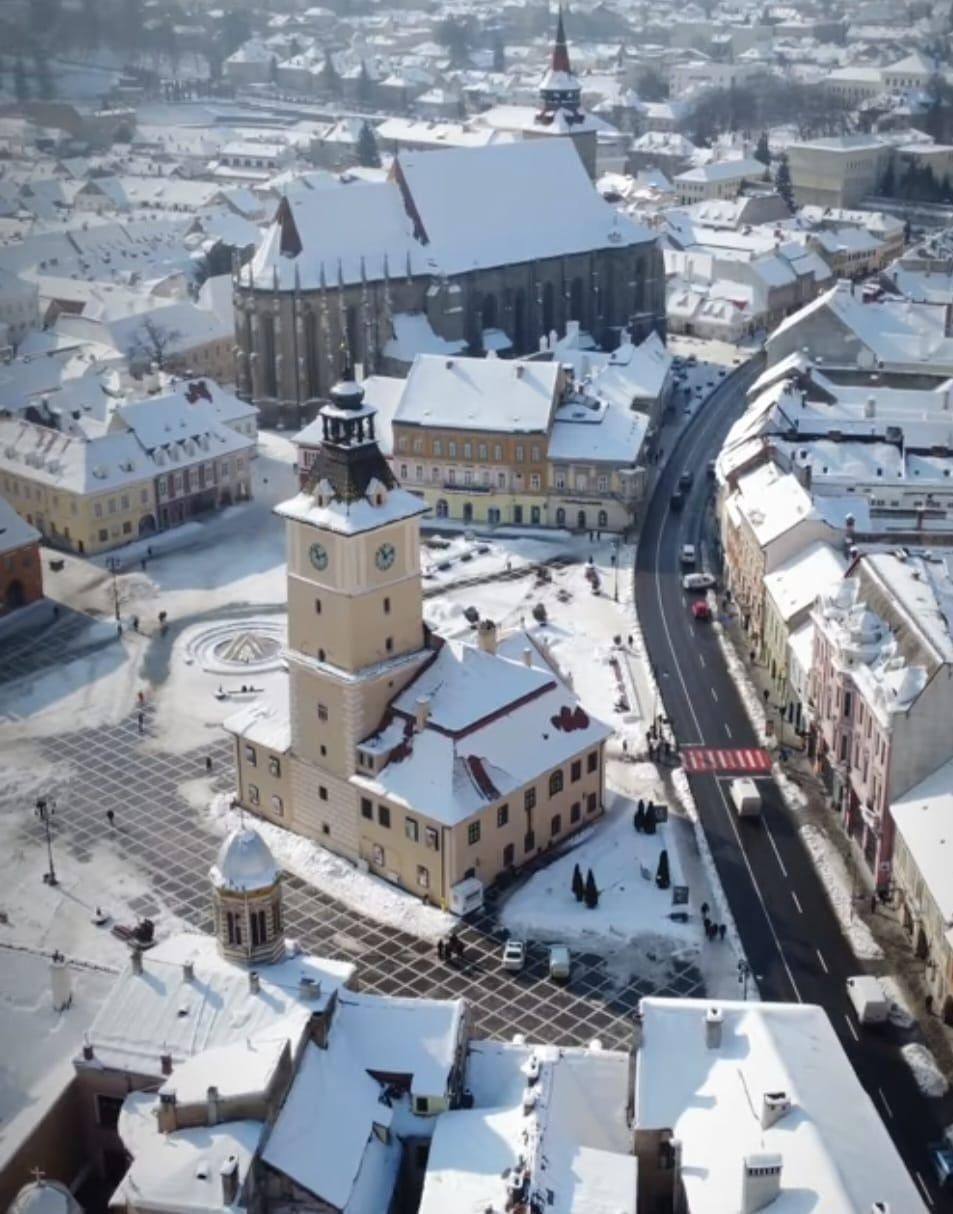
December
Highs around 4°C, lows around −3°C and the foggiest month of the year. The Christmas market fills Piața Sfatului, and the ski season at Poiana Brașov starts as soon as there is enough snow, natural or artificial: on 18 December in 2024 and on 30 December in 2025, when more than 90% of the snow on the slopes was artificial.
Around 21 December there are less than 9 hours of daylight, with sunrise about 07:53 and sunset 16:38. The week between Christmas and New Year is one of the busiest of the year, so book early. For indoor and outdoor ideas on freezing days, see our guide to Brașov in winter.
January
The coldest month: highs around 2°C, lows around −6°C, and 27 nights below freezing on average. After the 6–7 January holidays the city goes quiet. Skiing is usually at its most reliable from January to February.
February
Still winter, with a little more sun and highs around 7°C. Snow is less frequent than in January but cold spells are still common: −25.4°C was recorded in February 2023. A good month for skiing without the holiday crowds. In 2027 Brașov hosts the European Youth Olympic Winter Festival (EYOF) from 14 to 21 February, with the alpine skiing races at Poiana Brașov, so book early for those dates.
Spring (March to May)
Spring changes fast. A 15°C afternoon can be followed by snow, and the trails stay muddy until May. The Old Town is quiet until Easter, and the hills turn green in late April.
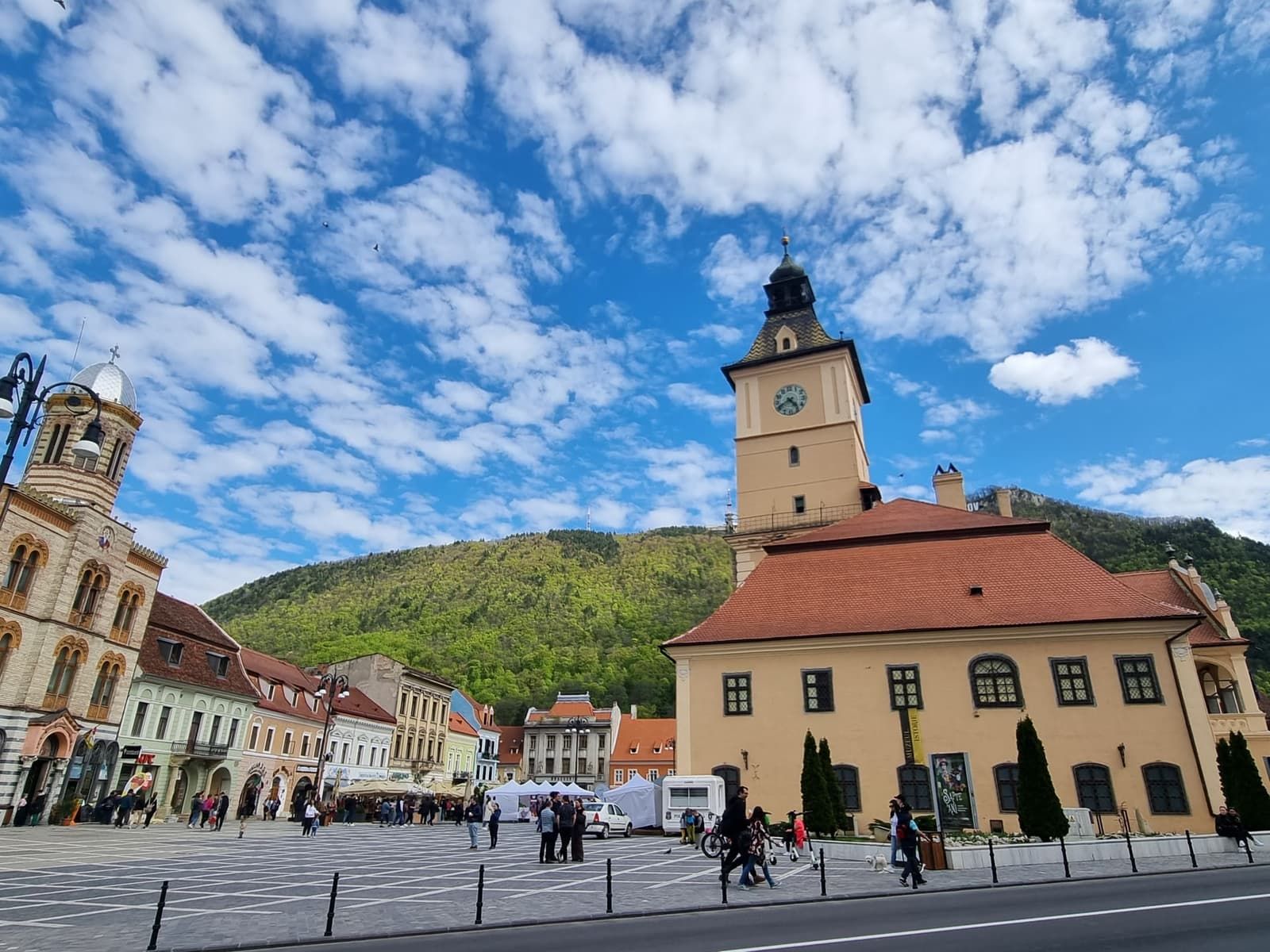
March
Highs around 11°C but frost on most nights, 17 on average, and snow is still possible. Expect grey days and slush on the forest paths. The ski season at Poiana ends in late March: the last day was 27 March in 2025 and 29 March in 2026.
April
Highs around 16°C and frosts become rare by the end of the month. Orthodox Easter, in April or early May, is a long weekend for Romanians, and the following weekend brings the Brașov Days festival and the Junii parade, described under May.
May
Highs around 20°C, but rain increases to about 11 wet days and the first thunderstorms arrive. Brașov’s own spring festival, the Junii parade, takes place on the first Sunday after Orthodox Easter, at the end of the Brașov Days festival (Zilele Brașovului), so in April or May: it was on 19 April in 2026, and with Orthodox Easter on 2 May 2027 it is expected on 9 May 2027. The 1 May long weekend is busy.
Advertisement
Summer (June to August)
Summer days are warm rather than hot, and the nights are cool: even in July the average low is 13°C, which is why Romanians escape the heat of Bucharest to Brașov. Most of the summer rain falls in short, heavy afternoon storms, often with thunder, while mornings are usually clear.
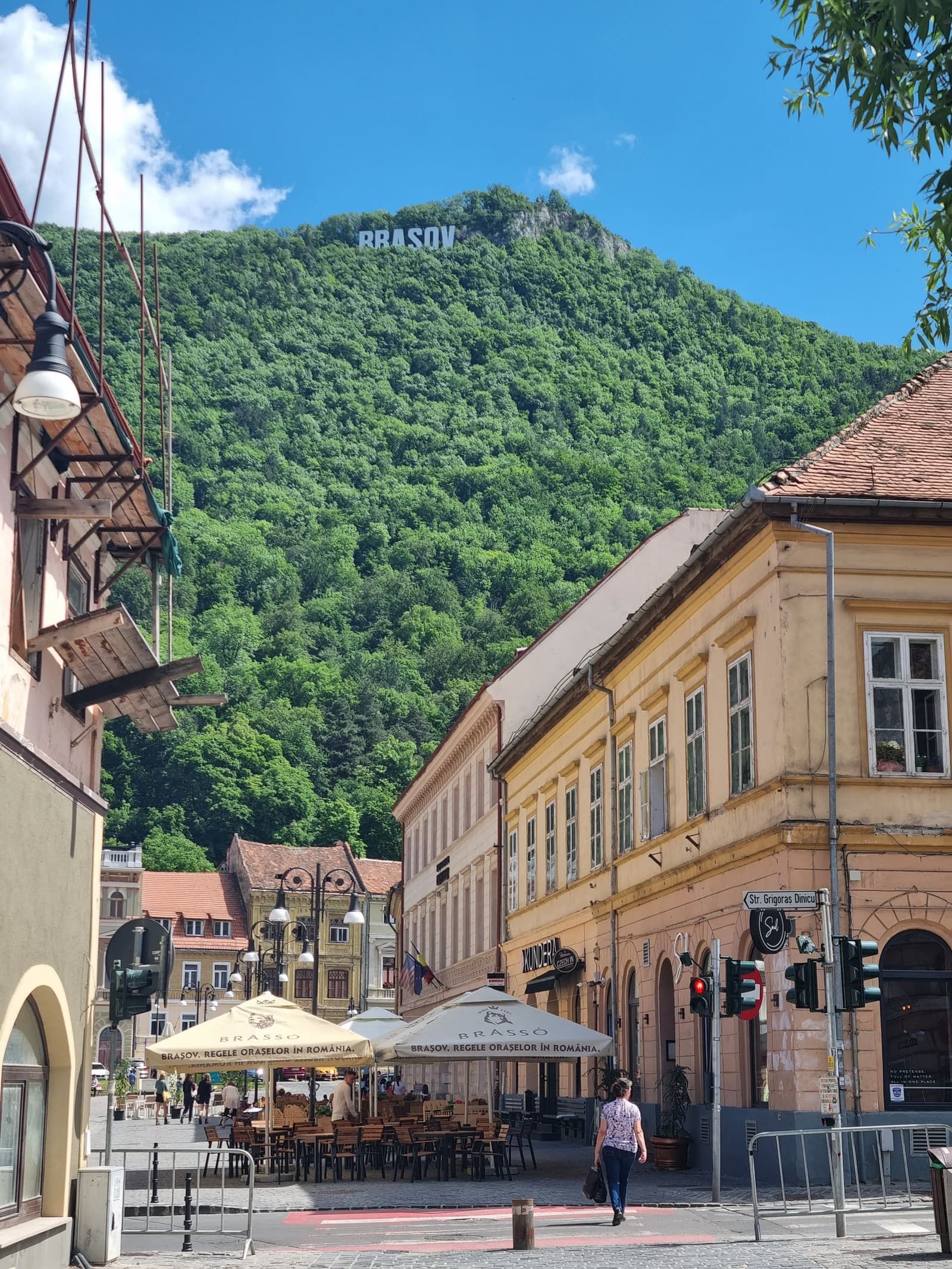
June
Highs around 25°C and the wettest month of the year, with about 99 mm of rain on 11 days, mostly from short afternoon thunderstorms. The days are the longest of the year: around 21 June the sun rises at about 05:26 and sets at 21:12. Plan hikes and the Tâmpa climb for the morning and keep an indoor option for the afternoon; our rainy day guide lists the best ones.
July
Highs around 27°C, lows around 13°C and about 7 thunderstorm days. July and August are peak season: book accommodation early, and plan popular day trips such as Bran Castle for weekdays if you can.
August
The warmest month by day (around 28°C) and drier than June and July. Heatwaves can push the temperature to 35–37°C for a few days. The 15 August holiday weekend is one of the busiest of the summer, and Oktoberfest Brașov starts at the end of the month and runs from 27 August to 6 September in 2026, by Parcul Tractorul.
Autumn (September to November)
September and early October are often settled, sunny and mild. By November the city is grey and damp, with the first snow of the season.
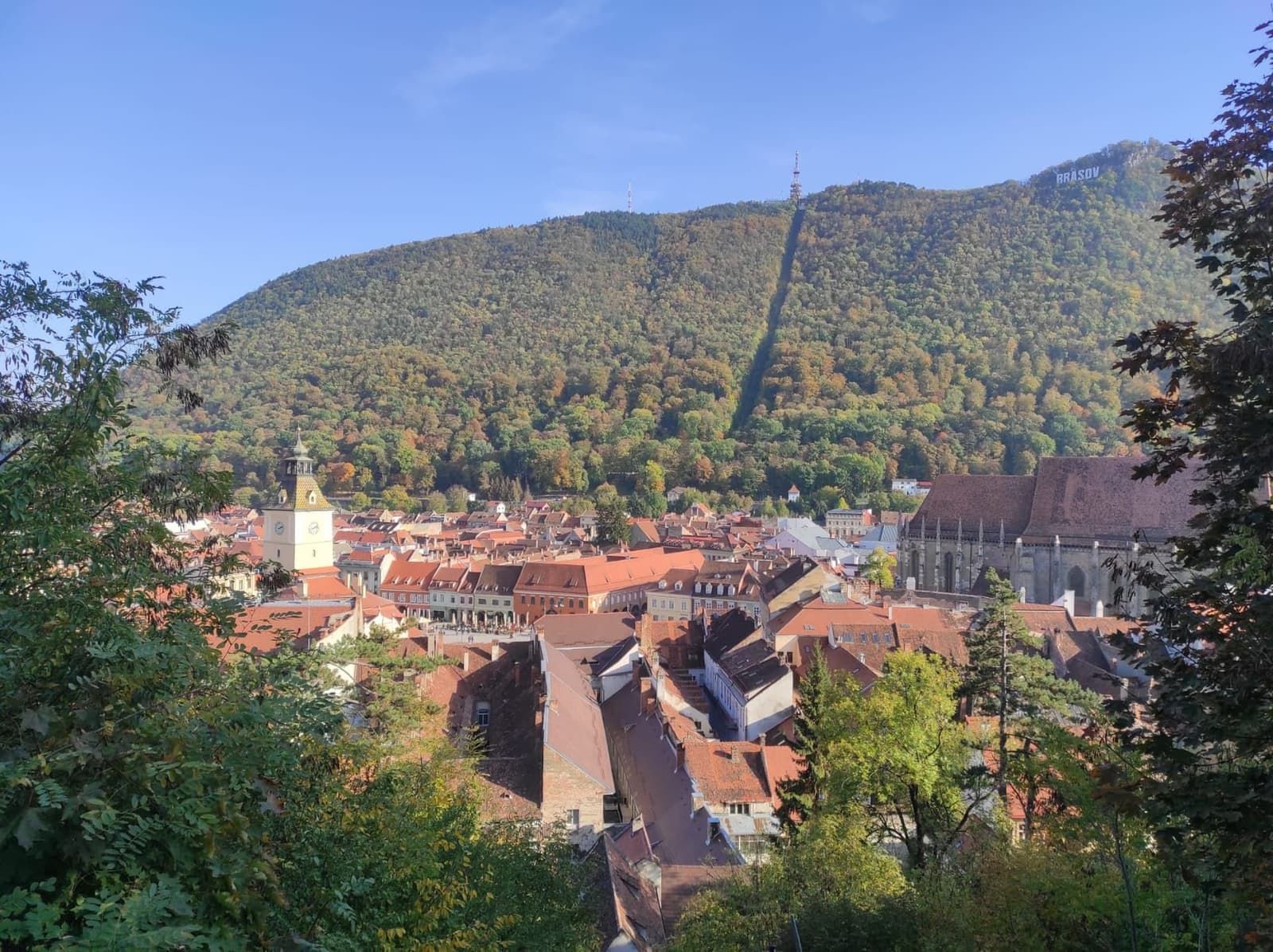
September
Highs around 23°C, lows around 9°C and only about 7 wet days. Our favourite month for walking, hiking and day trips: the summer crowds have gone and everything is still open.
October
Highs around 16°C, but nights are close to freezing and fog becomes more common. The forests on Tâmpa and around Poiana Brașov usually change colour during the month. Bring a warm layer for the evenings.
November
Highs around 10°C, frosts on about half of the nights and the first snow, usually late in the month. It is one of the quietest months until the Christmas market opens at the end of November, and the 30 November–1 December long weekend brings visitors back.
What to pack for Brașov
- All year: layers. From March to October the afternoon is usually 11–15°C warmer than the night. Comfortable shoes with grip for the cobbles, which are slippery when wet.
- May to August: a light rain jacket or a small umbrella for afternoon storms, sun cream and a warm top for the evenings.
- September to November: a warm jacket, a hat for the evenings and waterproof shoes.
- December to March: a proper winter coat, hat, gloves and boots with a good sole for ice and snow.
- For the mountains: it is roughly 6°C colder for every 1,000 m you climb, and windier. On top of Postăvarul (1,799 m) it is typically about 8°C colder than in town.
Check the live clothing tool before you set out: it turns today’s Brașov forecast into an outfit suggestion.
FAQ
What is the best month to visit Brașov?
September, followed by June. Both have warm afternoons and long days; September is drier and less crowded. For snow and the Christmas market, come in December.
Does it snow in Brașov?
Yes. Snow falls on about 29 days a year, mostly from December to February, and it is possible from November to April. Snow in the city often melts within days; it lasts much longer at Poiana Brașov, about 1,000 m up.
How cold is Brașov in winter?
In January the average high is about 2°C and the average low about −6°C. Most winters have at least one night at −18°C or colder, and the station recorded −33.3°C on 8 January 2015.
How hot does Brașov get in summer?
Average highs are 25–28°C from June to August and the nights stay cool, around 12–13°C. Heatwaves can reach 35–37°C for a few days.
What is the rainiest month in Brașov?
June, with about 99 mm, followed by July and May. The driest months are December to February.
What is Brașov like in October?
Mild days around 16°C, cold nights and autumn colours on the hills. It is a good month for walks and day trips, with far fewer visitors than in summer.
Sources
- Monthly observations for the Brașov-Ghimbav station (WMO 15300), 2015–2025: Meteomanz. Averages calculated by Wow Brașov.
- Lowest temperature on record at the station (−33.3°C, 8 January 2015): Puterea.ro.
- Ski season dates 2025/26: Brașov City Hall, 31 December 2025 and 26 March 2026.
- Junii parade and Brașov Days: Brașov City Hall. EYOF 2027: Brașov City Hall. Oktoberfest 2026: oktoberfestromania.ro. Christmas market 2026 (planned): pietepublice.ro.
- Sunrise and sunset: sunrise-sunset.org.
- Today’s forecast for the city: What to wear today in Brașov.
Advertisement
What changed
- Rewritten with a monthly climate table (2015–2025 station data), month-by-month advice and 2026–27 event and ski season dates.

